Mombasa offers much more than a quick coastal stop. The city combines Indian Ocean history, Swahili culture, marine adventure, heritage architecture, and easy access to the wider Kenya coast. As a result, it works beautifully for travelers who want both relaxation and substance in the same itinerary.
This guide explains how to reach Mombasa, what to see once you arrive, and how to connect the city with beaches, marine parks, and nearby safari destinations. In addition, it shows why Mombasa remains one of the most important travel hubs on the East African coast.
How to Get to Mombasa
By Air
Flying remains the fastest way to reach Mombasa. Moi International Airport sits about 9 kilometers west of the city center, and most international travelers connect through Nairobi before continuing to the coast. Meanwhile, travelers heading straight to Diani often prefer Ukunda Airstrip because it sits much closer to the beach.
Air travel works especially well for guests combining Mombasa with a broader Kenya safari. In addition, it reduces long transfer times and makes it easier to pair the coast with Maasai Mara, Tsavo, or Nairobi-based experiences. As a result, it remains the most efficient option for travelers with tighter schedules.
By Train
The Madaraka Express offers one of Kenya’s most memorable journeys. However, many travelers still overlook it because flying appears easier on paper. In reality, the train gives passengers wide views across the Tsavo ecosystem and often turns a transfer day into a scenic part of the holiday.
Because the railway crosses open country and elevated stretches of savannah, passengers often spot wildlife along the route. As a result, the train feels far more immersive than standard transportation. The express service usually takes about five hours, while the inter-county service takes closer to six.
For travelers who want more than speed, this route adds atmosphere and variety. Meanwhile, the changing landscape helps create a stronger sense of arrival at the coast.
Train Stations and What to Do at Each Stop
The Madaraka Express stops at several stations between Nairobi and Mombasa, and each one opens a different part of Kenya to travelers.
Nairobi Terminus (Syokimau):
Located just outside the city near Jomo Kenyatta International Airport, Nairobi Terminus works well for travelers who want to connect quickly with Nairobi National Park, the David Sheldrick Wildlife Trust elephant orphanage, the Giraffe Centre, or the Karen Blixen Museum. Because access is straightforward, it remains the easiest starting point for guests combining city highlights with the train.
Athi River:
Athi River sits a short distance from Nairobi and gives access to the Athi-Kapiti plains ecosystem and the southern corridor. Very quickly, industrial scenery gives way to open savannah. As a result, the shift in landscape begins much sooner than many travelers expect.
Emali:
Emali is the key station for travelers heading to Amboseli National Park. The park, famous for its elephant herds and Mount Kilimanjaro views, lies within practical reach by transfer. In addition, Emali works especially well for travelers who want to combine the SGR with Amboseli without returning to Nairobi first.
Kibwezi:
Kibwezi offers access to the southern edge of Kibwezi Forest, one of Kenya’s largest dryland forests. Birders and botanists value this area because it supports species that are far less common elsewhere. Meanwhile, the setting feels quieter and more ecologically focused than the busier tourism corridors.
Mtito Andei:
Mtito Andei provides one of the strongest stopover points for Tsavo-linked travel. Baobab trees, rocky outcrops, and open plains create a landscape that already feels safari-like. For that reason, many travelers use this station when connecting the railway with Tsavo East by road.
Voi:
Voi has become the most established rail-to-safari transition point on the route. It connects quickly with Tsavo East National Park, and nearby accommodation options continue to grow because of that demand. As a result, Voi remains one of the most practical stations for travelers who want to move efficiently from train travel into wildlife viewing.
Maisenyi and Mariakani:
Mariakani begins to signal the approach to the coast. The air grows warmer, the vegetation softens, and the landscape gradually shifts toward coastal scrub and palms. Even so, the station itself is more about onward access than sightseeing.
Mombasa Terminus (Miritini):
Mombasa Terminus connects efficiently with the city center, Old Town, and the ferry route to Diani Beach. Taxis, private transfers, and ride services all make onward movement easy. Ultimately, it is the final link that turns the railway into a smooth coast-and-safari journey.
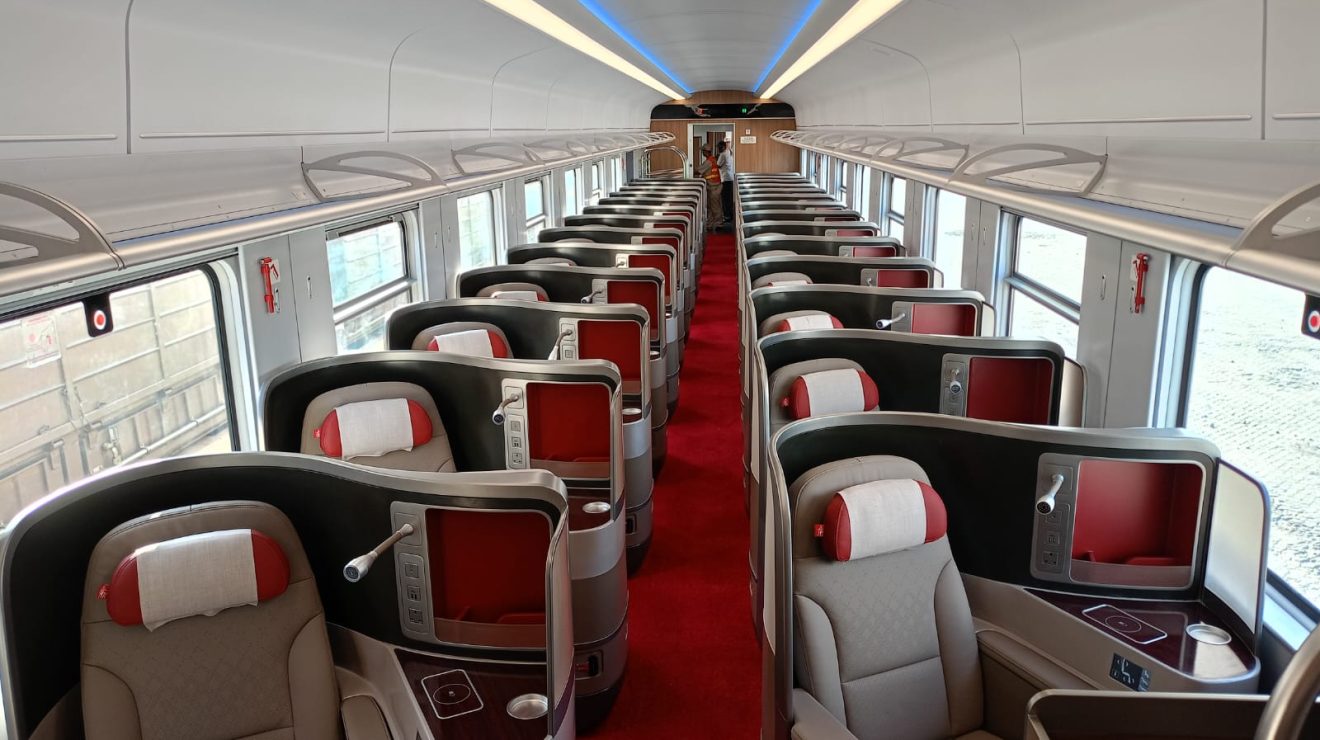
During the first half of 2025 alone, over KSh 2 billion in revenue was generated by the Madaraka Express, marking a 12% increase over previous year-on-year figures. The railway is no longer a budget transport option. It is a sophisticated, increasingly popular, and genuinely memorable way to connect Kenya’s safari interior with its coast.
By Road
The road journey from Nairobi to Mombasa covers roughly 480 kilometers and usually takes 8 to 9 hours, depending on traffic and stops. Even so, many travelers still choose this route because it offers more flexibility than flying or taking the train.
A road transfer works especially well for travelers who want to combine the coast with Tsavo East, Tsavo West, or Amboseli. Along the way, the scenery shifts from busy urban edges to baobab country, open plains, and red-soil landscapes that feel unmistakably Kenyan. By contrast, a flight gets you there faster, but it removes that overland sense of arrival.
Because the road allows custom stops, it suits travelers who prefer a more tailored route. In addition, it works well for guests traveling with private guides or building multi-stop safari and coast itineraries.
Mombasa to Tsavo East National Park:
approximately 160 to 170 kilometers, depending on your starting point in Mombasa and which park entrance you use. The journey takes 3 to 4 hours by car.
Mombasa to Tsavo West National Park:
about 240 kilometers via Mtito Andei, roughly 4 to 5 hours.
Mombasa to Amboseli National Park:
451 kilometers give or take, a drive of 7 to 8 hours via Tsavo West and Kimana Gate.
Mombasa to Nairobi:
480 kilometers or so, 8 to 9 hours by road, passing through both Tsavo parks along the way.
Mombasa to Diani Beach:
40 kilometers by road. Around 50 minutes by car, including the Likoni Ferry crossing.
Mombasa to Watamu:
110 kilometers north along the A14 coastal highway, taking about 2 to 3 hours. The route passes through Kilifi and offers ocean views throughout.
Mombasa to Malindi:
120 kilometers north, about 2.5 hours by road on the A14 coastal highway.
Mombasa to Lamu:
320 kilometers, taking about 6 to 7 hours to reach Mokowe, after which travelers take a ferry or private boat to Lamu Island itself.
By Ferry: The Likoni Crossing and Coastal Island Life
The Likoni Ferry is the most essential crossing on Kenya’s south coast. Running between Mombasa Island and the Likoni mainland on the south coast, it carries thousands of vehicles and pedestrians daily. For travelers heading to Diani Beach, the Likoni Ferry is the direct gateway. The crossing takes only a few minutes and runs around the clock. It is one of those unexpectedly cinematic moments in Kenyan travel, watching Mombasa’s harbor and dhows and the Indian Ocean open up around you as you cross.
For travelers heading north to Kilifi, Watamu, or Malindi, the Nyali Bridge carries road traffic across Mombasa Creek without a ferry. For Lamu, travelers reach Mokowe by road and then cross to the island by scheduled ferry or private boat hire. Lamu does not have a major road connection to the island itself, so the boat crossing from Mokowe is the only way in</span>
What to Do in Mombasa
Old Town: Where Five Centuries Live in One Square Kilometer
One of East Africa’s most atmospheric heritage walks. Carved Zanzibari doors, coral-stone merchant houses, spice-scented alleys, and five centuries of Swahili, Arab, Indian, and Portuguese history compressed into one square kilometer. Always go with a local guide. The stories behind the doorways are the whole point.
Leven House Museum
One of Mombasa’s most overlooked historic buildings. Built in the late 18th century and used as a British naval base in the 1820s, it was here that the Mazrui clan formally requested British protection against Omani rule. The exhibits cover Mombasa’s maritime history and Indian Ocean trade networks. The museum sits within easy walking distance of Fort Jesus, so it fits naturally into any Old Town route.
Interfaith Heritage Trail
Mombasa is one of East Africa’s most religiously diverse cities. The Mandhry Mosque (dating to 1570, one of Kenya’s oldest), the Lord Shiva Temple (reflecting the city’s deep Indian Hindu roots), the Holy Ghost Cathedral (one of East Africa’s oldest Catholic cathedrals), and the Baluchi Mosque in Old Town all sit within reach of each other. Walking this trail is a quiet reminder of how many civilizations built this city together.
Akamba Handicraft Cooperative
Akamba Handicraft Cooperative is one of East Africa’s largest craft markets. Visitors can browse woodcarvings, beadwork, soapstone pieces, fabrics, and jewelry made and sold on site.
As a result, it is one of the best shopping stops on the Kenya coast for travelers who want variety and direct artisan access.
Mama Ngina Waterfront
Mombasa’s reclaimed seafront promenade. Food stalls, dhow views, evening performers, and one of the most reliable sunsets in the city without needing a boat. The social heart of Mombasa at dusk.
Fort Jesus: A UNESCO World Heritage Site and an Uncomfortable History
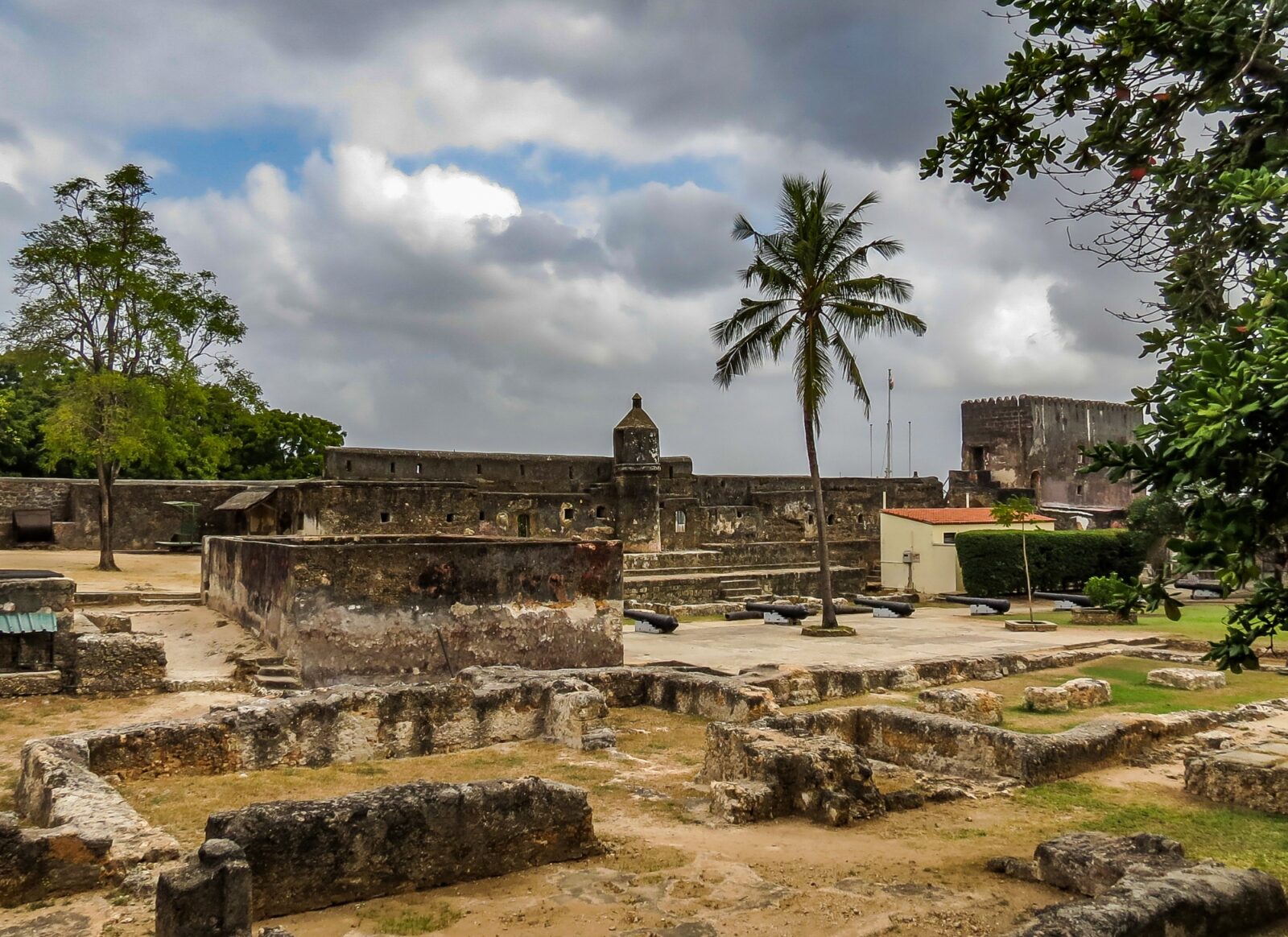
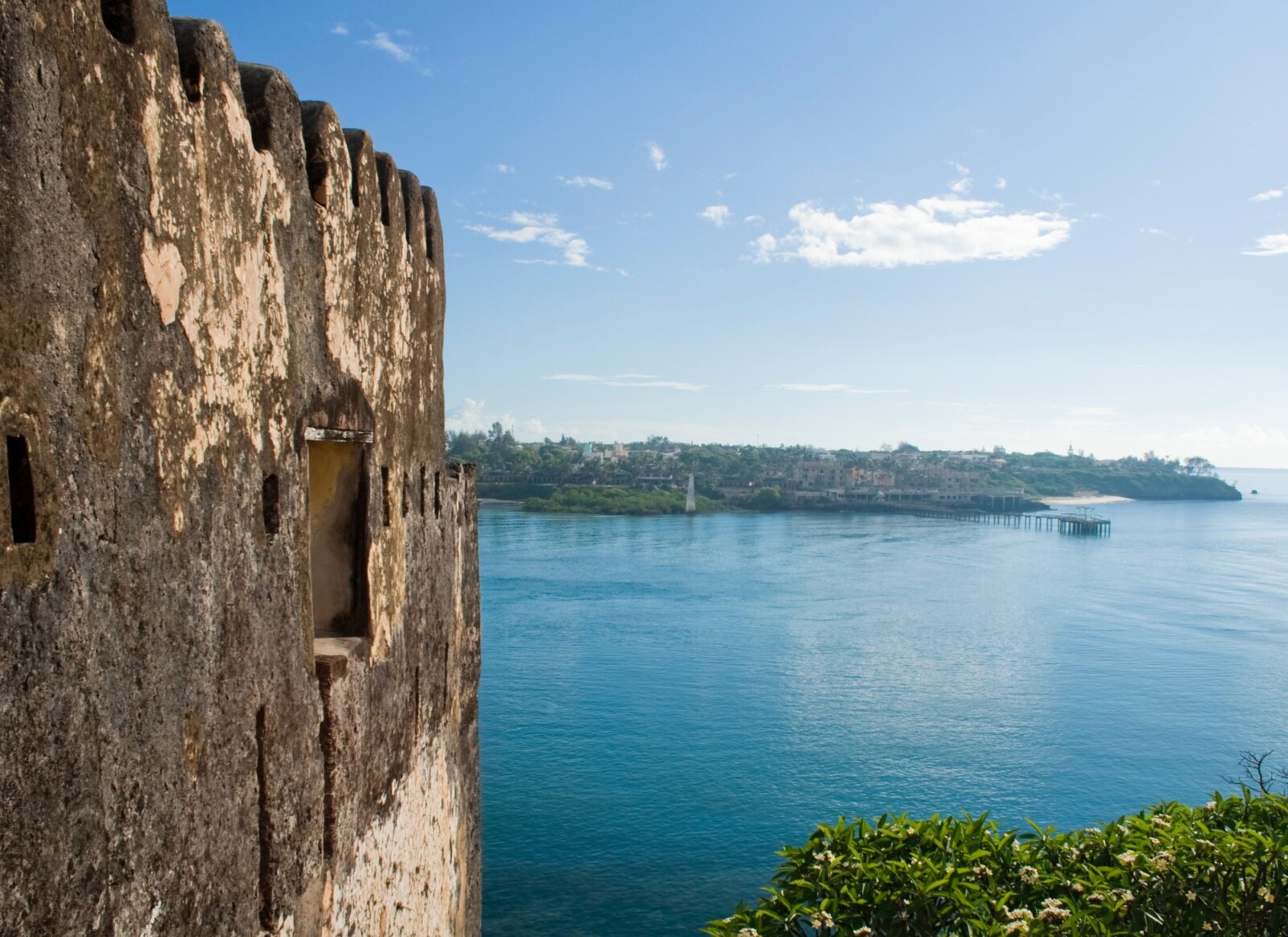
Fort Jesus is a UNESCO World Heritage Site built by the Portuguese in 1593 to control Indian Ocean trade. Over the centuries, it changed hands multiple times and witnessed repeated sieges, battles, and periods of colonial administration. Today, it remains one of the best-preserved 16th-century military fortifications in the world. Allow at least two hours for your visit, and go with a guide if possible.
UNESCO List: https://whc.unesco.org/en/list/1295
The Mombasa Tusks and City Landmarks
The famous aluminum elephant tusks that arch over Moi Avenue are Mombasa’s most photographed landmark, erected in 1952 to welcome Queen Elizabeth II. They have become the city’s unofficial symbol and a reliable orientation point in the city center. Nearby, the Leven House Museum and the Courthouse building represent some of the city’s finest colonial-era architecture.
Explore Spice Markets and Street Food
The spice trade helped build Mombasa, and the city still reflects that history in its markets and food culture. For example, Mackinnon Market and Old Town spice shops bring together cloves, cardamom, cinnamon, and other ingredients that continue to define Swahili cooking. Meanwhile, dishes such as mahamri, mishkaki, biryani, samosas, and urojo reveal how flavor still links the coast to its trading past.
Food adds another layer to the city experience. As a result, travelers who make time for markets and street food often leave with a much stronger understanding of Mombasa’s identity. In addition, these stops pair naturally with a walking tour through Old Town.
Water and Marine Activities
The Mombasa coast is one of East Africa’s strongest destinations for marine experiences. Options include scuba diving over coral gardens in Mombasa Marine National Park, deep-sea fishing charters for marlin and sailfish, traditional dhow sunset cruises from the Old Port, kitesurfing on the north coast, glass-bottom boat tours, paddleboarding, jet skiing, kayaking along the creek, and snorkeling over protected reefs. The water here rewards every level from first-time snorkelers to experienced divers.
Bombolulu Workshops and Cultural Centre
Bombolulu offers one of the most meaningful shopping and cultural experiences in Mombasa. The center supports artisans with disabilities who produce jewelry, textiles, leatherwork, and furniture with real skill and consistency. Because the work is both beautiful and purposeful, visitors leave with more than souvenirs.
In addition, a visit directly supports livelihoods and long-term inclusion. That makes Bombolulu especially valuable for travelers who want their spending to have a more visible local impact.
North Coast Beaches
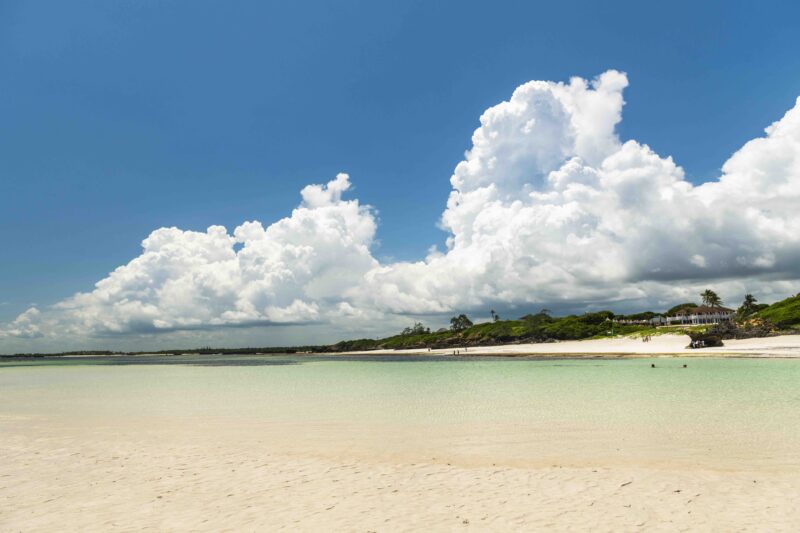
Mombasa’s own beach strip runs north from the city across Nyali, Bamburi, and Shanzu. Nyali is closest and most accessible. Bamburi is the water sports hub, sitting directly beside Haller Park. Shanzu is quieter and more resort-oriented. All three offer calm reef-protected swimming, water sports, and the classic Kenya beach experience within 20 minutes of the city center.
Dhow Dinner Cruise
A dhow dinner cruise is one of Mombasa’s most memorable evening experiences. Travelers sail on a traditional wooden dhow at sunset while enjoying Swahili cuisine, live taarab music, and views of the Mombasa skyline. Most major hotels and trusted local operators can arrange it.
These small edits help reduce sentence fragments and make transitions smoother.
Mombasa Golf Club
Founded in 1911, one of the oldest golf courses in Africa. An 18-hole clifftop course with Indian Ocean views that distract even the most disciplined players. Non-members are welcome with advance arrangement. A genuinely historic and unexpected way to spend a morning on the island.
Mombasa Marine National Park
Ten square kilometers of protected coral reef just offshore from the north coast beaches. Snorkeling and glass-bottom boat trips reveal coral gardens, reef fish, sea turtles, and one of the most intact marine ecosystems on Kenya’s coast. Entry arranged through Kenya Wildlife Service.
Haller Park: From Quarry to Ecosystem
A former limestone quarry transformed by hand into a thriving ecosystem. Giraffes, hippos, Nile crocodiles, giant tortoises, elands, and over 180 bird species now roam what was once an industrial wasteland. One of Africa’s most compelling ecological regeneration stories and an excellent family-friendly conservation stop.
Nguuni Nature Sanctuary
Known as the green lungs of Mombasa. A nature sanctuary just 10 minutes from Bamburi with giraffes, oryx, ostriches, waterbucks, and over 300 bird species. Home to an award-winning solar-powered Education Centre serving over 115 local schools. Conservation-led, community-rooted, and genuinely moving to visit.
Taarab Music and Nightlife
Taarab is the classical music of the Swahili coast, blending Arabic, Indian, and African traditions into something found nowhere else on earth. Live performances happen at cultural centres, weddings, and some restaurants throughout Mombasa. The north coast beach bar and club scene runs alongside the resort strip, and most major hotels offer casino facilities, live music, and dhow dinner entertainment through the evening.
Shimba Hills National Reserve
Just 33 kilometers from Mombasa and one hour by road. Home to Kenya’s only population of sable antelope, elephants, leopards, and the spectacular Sheldrick Falls waterfall trail inside a coastal rainforest. An excellent half-day or full-day safari day trip that most Mombasa visitors never take. They should.
Arabuko Sokoke Forest Reserve
Located near Watamu, 110 kilometers north of Mombasa. One of East Africa’s largest and most important remaining coastal forests, protecting endemic bird species found nowhere else on the continent. A must-visit for serious birders combining the coast with a north-coast extension.
Gedi Ruins
A lost 12th century Swahili city hidden inside coastal forest near Malindi, 120 kilometers north of Mombasa. Coral-stone palaces, mosques, merchants’ houses, and a pillar tomb emerging from the trees as if the forest grew over an entire civilization overnight. Archaeological, eerie, and completely unforgettable.
Why Mombasa and Diani Work So Well Together
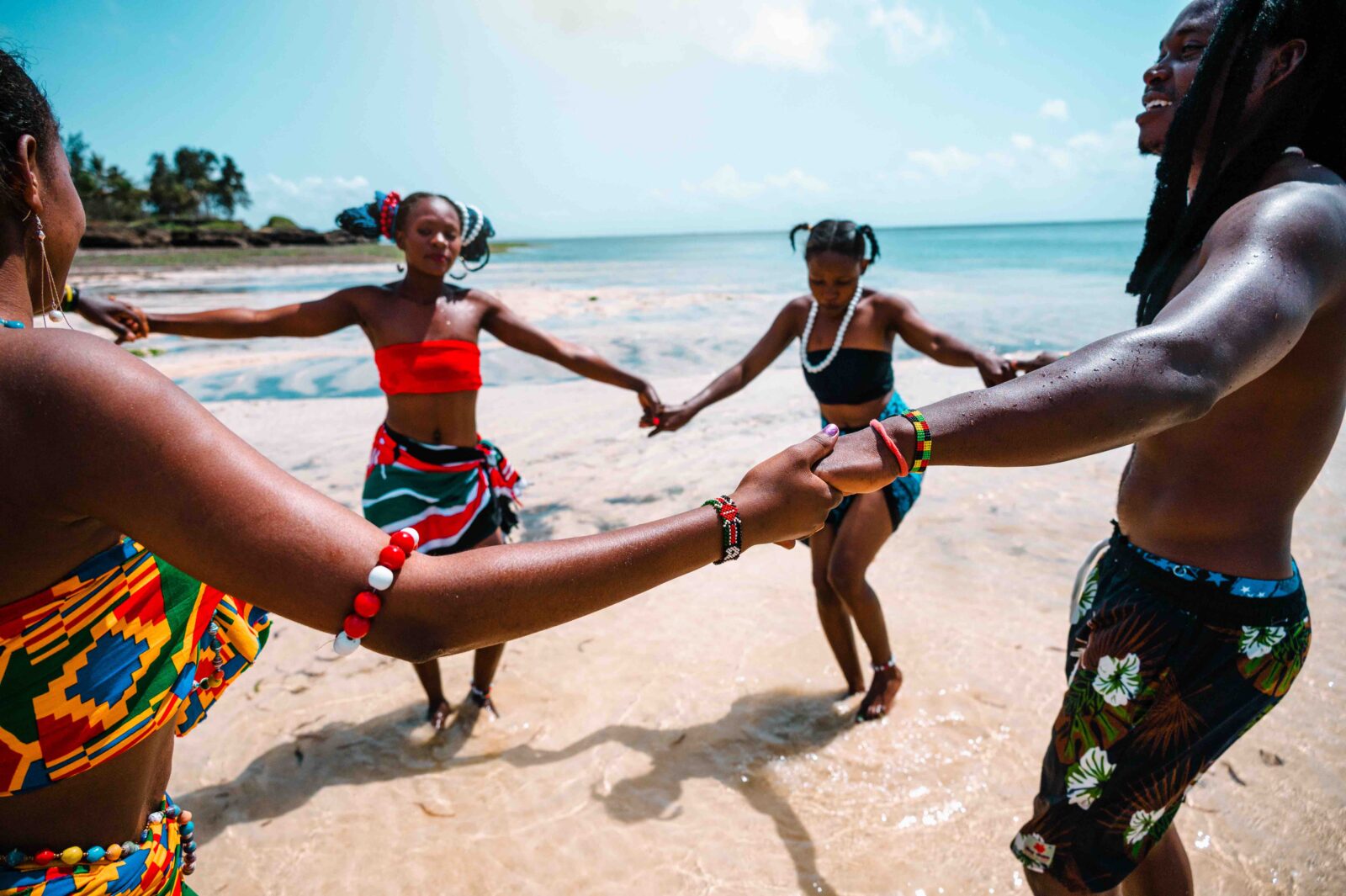
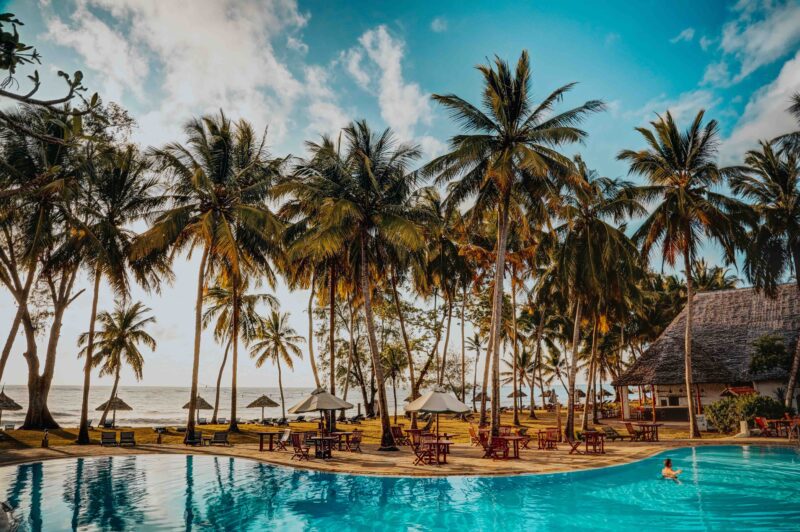
Mombasa and Diani Beach create one of the strongest combinations on the Kenya coast. Mombasa delivers history, markets, marine access, and city energy. Diani, meanwhile, delivers white sand, reef-protected water, marine excursions, and a more resort-focused pace.
The distance between them remains short enough to make the pairing efficient. As a result, travelers can explore Old Town, Fort Jesus, Haller Park, or the waterfront in Mombasa, then reach Diani in time for a quieter beach evening.
Many travelers find that this combination feels balanced rather than repetitive. By contrast, staying in only one coastal base can limit the range of experiences. Ultimately, Mombasa and Diani work best together because one adds cultural depth while the other adds beach rhythm and marine leisure.
Other Coastal Destinations Near Mombasa
Mombasa also works as a gateway to the wider coast. Because the road network and transfer logic are straightforward, travelers can add other coastal destinations without making the itinerary feel fragmented. In addition, each destination offers a distinct atmosphere, which helps travelers choose a route that matches their style.
Watamu (north coast):
Watamu lies about 110 kilometers north of Mombasa, or roughly 2 to 3 hours by road along the A14 coastal highway. Although Watamu does not have its own major airport, Malindi Airport is only about 20 kilometers away and connects easily by short transfer.
Travelers come here for Watamu Marine National Park, sea turtle conservation work, Arabuko Sokoke Forest Reserve, and a coastal atmosphere that feels both relaxed and culturally distinctive.
Malindi (north coast):
Malindi sits about 120 kilometers north of Mombasa and takes roughly 2.5 hours to reach by road. It is one of the oldest Arab and Portuguese settlements on the Kenya coast, and it offers a different blend of history, culture, and marine access. In addition, Malindi works well as a base for visits to the National Museum and the nearby Gedi Ruins.
Kilifi (north coast):
Kilifi is about 60 kilometers north of Mombasa, which makes it one of the easiest coastal extensions from the city. The drive usually takes 1 to 1.5 hours. Unlike the busier beach zones, Kilifi is known for creek scenery, sailing, kayaking, cliff walks, and a slower coastal rhythm.
Lamu (far north coast):
Lamu is much farther north and requires more planning. Travelers usually drive about 320 kilometers to Mokowe, then continue by ferry or private boat to Lamu Island. Even so, the reward is exceptional.
Lamu is Kenya’s oldest continuously inhabited town, a UNESCO World Heritage Site, and one of the most authentically preserved Swahili settlements on the coast. Because there are no cars on the island, the atmosphere feels immediately different from the rest of coastal Kenya.
Why Mombasa Matters in 2025 and 2026
Mombasa continues to strengthen its position as Kenya’s coastal gateway. Cruise activity, city events, marine tourism, and stronger coast-safari combinations keep the destination visible and relevant. At the same time, the city benefits from a rare combination of transport access, cultural depth, and easy onward travel.
Cruise Growth and Coastal Access
Cruise arrivals continue to bring fresh attention to Mombasa. Because the port remains one of the most important on the East African coast, the city keeps attracting travelers who want heritage, marine access, and strong regional connections in one place. As a result, Mombasa is not only a beach destination, it is also a major arrival point.
Why Travelers Still Choose Mombasa
Travelers continue to choose Mombasa because it offers far more than one type of experience. For example, visitors can combine beaches, Old Town, Fort Jesus, marine parks, conservation stops, and onward safari links without changing regions. Ultimately, that flexibility gives the city lasting value for travelers who want both variety and convenience.
Conservation Organizations Near Mombasa and Along the Kenya Coast
For travelers who want their visit to support the places they explore, the Mombasa coast region offers several meaningful conservation stops. Some focus on primates, others on marine life, youth education, or community-led wildlife protection. Together, they show that the Kenya coast is not only beautiful, but also deeply active in conservation work. In addition, these experiences give travelers a more responsible way to engage with the region.
Colobus Conservation, Diani Beach
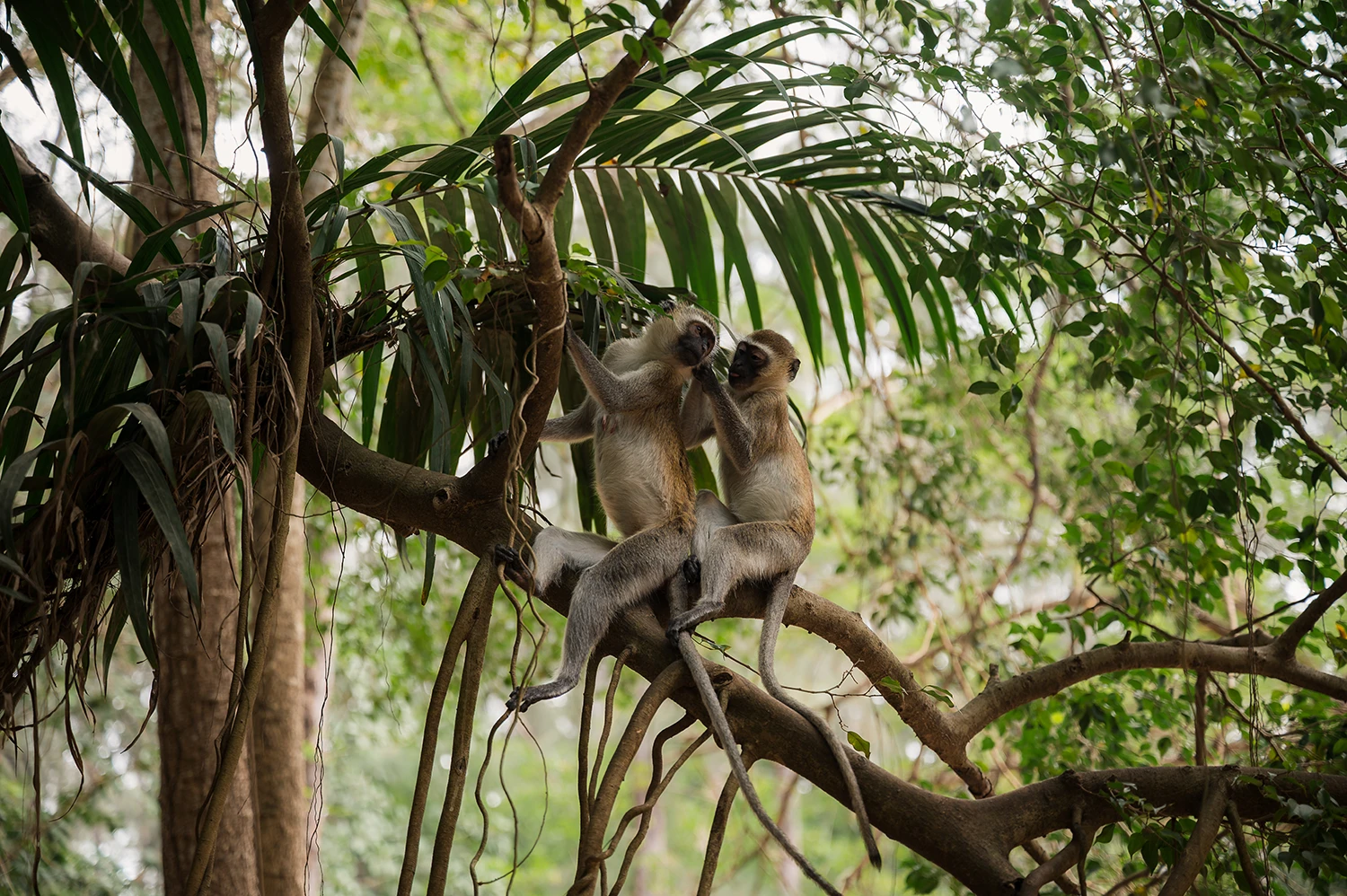
Colobus Conservation is one of the most important wildlife organizations on Kenya’s south coast. It focuses on the protection of primates, especially the nationally threatened Angolan colobus monkey. In addition, the organization has become widely known for its rope bridge system, which helps reduce monkey deaths along Diani Beach Road.
Visitors can join a guided eco-tour, learn about rescue and rehabilitation work, and support the center directly. Because the organization combines education, research, and practical conservation action, it gives travelers a very tangible way to engage with the coast beyond the beach. Website: colobusconservation.org
Nguuni Nature Sanctuary, Bamburi
Nguuni Nature Sanctuary offers one of the most accessible conservation experiences near Mombasa. Located close to Bamburi, it protects giraffes, oryx, ostriches, waterbucks, and a wide bird population on land that once served an industrial purpose. As a result, the sanctuary tells a story of restoration as well as wildlife.
At the same time, Nguuni’s education facilities strengthen its long-term value for local communities and schools. That makes the visit feel more meaningful than a simple wildlife stop. Website: nguuninaturesanctuary.org
Wildlife Clubs of Kenya (Mombasa Chapter)
The Mombasa Ocean Festival 2025 was organized by Wildlife Clubs of Kenya and served as a platform for environmental education, bringing together 450 members from nine local schools over five days, demonstrating that ocean awareness can take place in classrooms, on stages, on sports fields, and in art studios. Wildlife Clubs of Kenya is one of the oldest and most respected environmental youth education organizations in East Africa, with a strong coastal presence in Mombasa and Kwale counties.
Local Ocean Conservation, Watamu
Based in Watamu and operating within the Watamu Marine National Park and Biosphere Reserve, Local Ocean Conservation focuses on sea turtle protection, marine biodiversity monitoring, and community fisheries management along Kenya’s north coast. Their turtle monitoring and tagging programs operate year-round, and volunteer opportunities are available for travelers staying in the Watamu area. Website: watamuturtles.com
Kenya Wildlife Service (KWS) Coastal Operations
The Kenya Wildlife Service manages Mombasa Marine National Park and Reserve, Kiunga Marine National Reserve (near Lamu), Watamu Marine National Park, and the terrestrial parks of Tsavo and Shimba Hills that surround the Mombasa coast region. Traveler entry fees directly support KWS ranger operations, anti-poaching patrols, and community conservation programs across all managed areas.
Mwaluganje Elephant Sanctuary, Shimba Hills
Located near Shimba Hills National Reserve south of Mombasa, the Mwaluganje Elephant Sanctuary is a 24,000-acre community-managed conservation area established to create a corridor allowing elephants to move safely between Shimba Hills and the Mwaluganje Forest. The sanctuary is community-owned and operated, with proceeds going directly to surrounding villages. It is one of the most compelling examples of community-led wildlife conservation on Kenya’s south coast.
African Wildlife Foundation (AWF) Kenya
AWF Kenya’s work in 2025 focused on practical solutions including reliable water access, livelihoods that restore rather than degrade, and youth engagement, working across priority wildlife corridors including the Tsavo landscape. AWF partners with community groups, county governments, and youth organizations to strengthen Kenya’s conservation outcomes across the landscapes that surround and sustain the Mombasa coastal ecosystem.
How Mombasa Fits into a Back to the Source Tours Kenya Safari
Back to the Source Tours can organize Mombasa as a city stay, a coast-and-safari combination, or a broader Kenya itinerary that links history, beaches, marine activities, and wildlife experiences. In addition, we can connect Mombasa with Diani, Watamu, Malindi, Kilifi, Lamu, Tsavo, and Nairobi in a way that feels smooth rather than rushed. As a result, your coast experience feels more intentional, more comfortable, and far easier to enjoy.
Plan this experience with Back to the Source Tours: East Africa Tour Packages, East Africa Group Tours, and/or Request Your East Africa Safari Quote.