

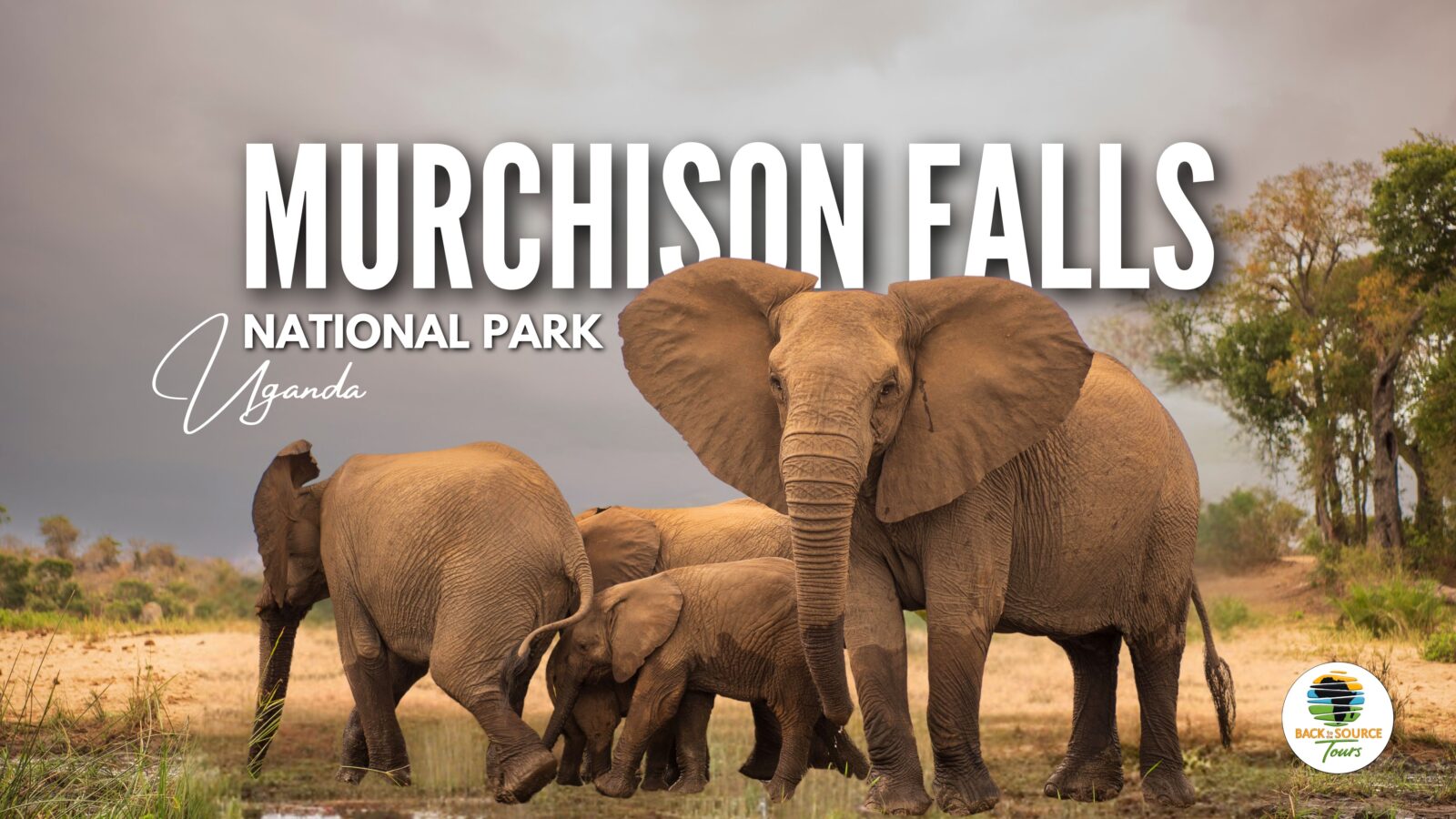
Murchison Falls National Park is one of the most rewarding safari destinations in Uganda. The park combines dramatic river scenery, strong wildlife viewing, and one of East Africa’s most powerful waterfalls in a single conservation area. As a result, it works beautifully as a standalone safari or as part of broader Uganda Tour Packages and East Africa Tour Packages designed by Back to the Source Tours.
The park also offers unusual range. Travelers can watch the Nile force itself through a narrow gorge, cruise past hippos and crocodiles, search for shoebills in the delta, and then head out across open savannah for giraffes, elephants, buffaloes, and antelope. Meanwhile, the scale of the landscape makes the experience feel broader and wilder than many first-time visitors expect
Why Murchison Falls National Park Matters
Murchison Falls matters because it brings together the river, the falls, the savannah, and the wider conservation area in a way that feels complete. Uganda Wildlife Authority places the park at the northern end of the Albertine Rift Valley and describes a landscape of open savannah, woodland, riverine forest, and palm-dotted plains. In addition, the Victoria Nile cuts directly through the park, which creates the river access and wildlife concentration that make Murchison especially memorable.
For many travelers, this is the most balanced wildlife park in Uganda. The park offers strong game viewing, one of the best boat safaris in East Africa, and a waterfall that gives the destination a true natural centerpiece. By contrast, some parks excel mainly in one feature. Murchison performs across several categories at once, which is exactly why it remains so important in Uganda safari planning.
The Falls Themselves: Why They Are the Park’s Crown Jewel
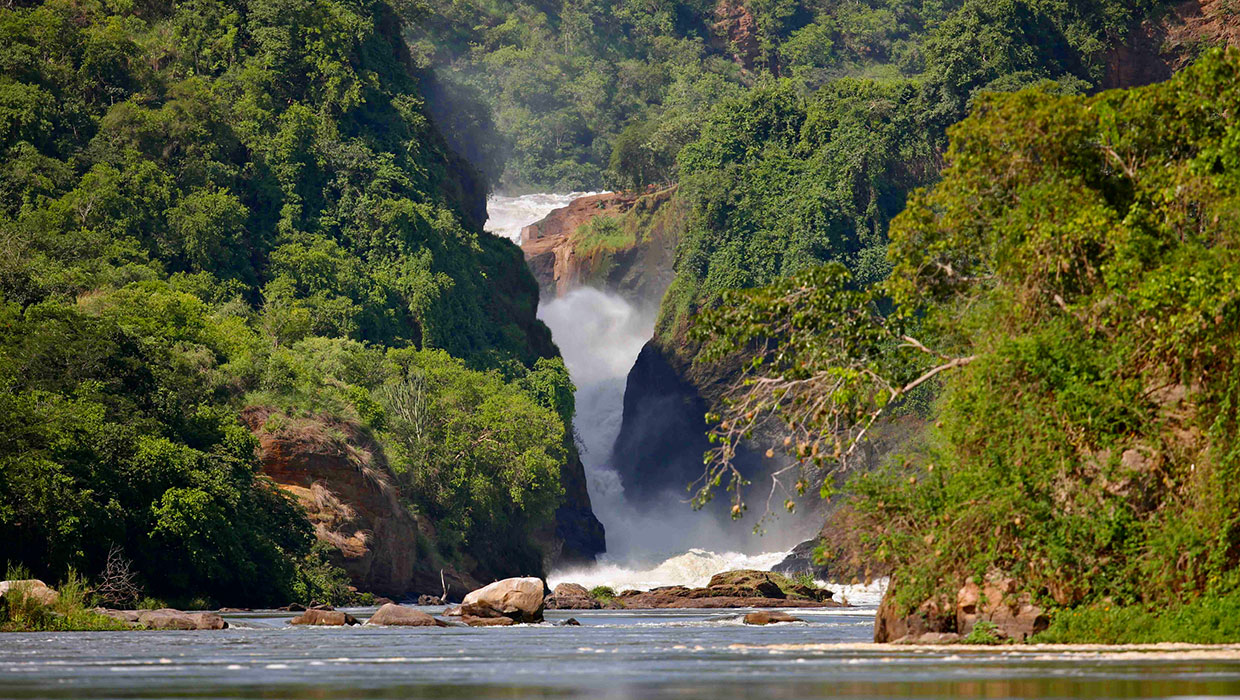
Murchison Falls is the defining feature of the park. Uganda Wildlife Authority says the Victoria Nile forces its entire volume through an 8 meter wide gorge and then plunges 45 meters into the Devil’s Cauldron below. That combination of compression, force, and noise creates one of the most dramatic natural spectacles in East Africa.
The falls matter because they change the feeling of the whole park. Upstream, the river supports boat traffic, birdlife, and riverbank wildlife. At the gorge, however, the Nile becomes violent, loud, and unexpectedly narrow. As a result, the Top of the Falls experience and the boat cruise to the base feel like essential parts of the same story rather than separate attractions.
Wildlife in Murchison Falls National Park
Uganda Wildlife Authority lists Murchison Falls National Park at 144 mammal species, 556 bird species, 51 reptiles, and 51 amphibians. That scale makes it one of the richest wildlife areas in Uganda. Meanwhile, the river and the northern savannah create two distinct viewing styles, which adds variety across the same safari.
What Mammals You Can Expect to See
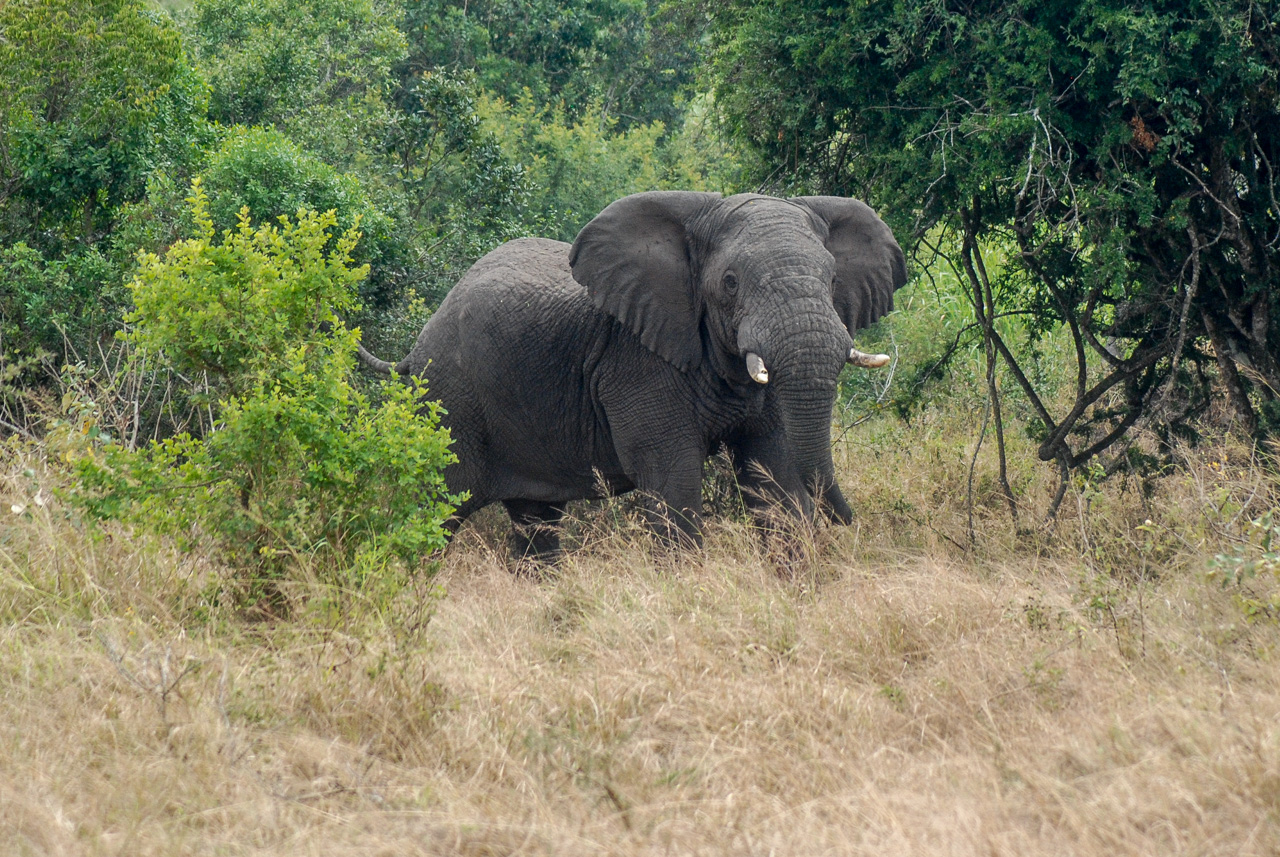
Murchison gives travelers strong chances to see elephants, giraffes, buffaloes, Uganda kob, waterbuck, hippos, Nile crocodiles, and other common savannah species.
UWA specifically notes over 900 elephants, more than 10,000 buffaloes, and roughly 35,000 Uganda kob, while also highlighting giraffes as a major wildlife feature of the park. As a result, game drives often feel productive even over a relatively short stay.
The northern sector is usually the focus for classic wildlife viewing. Because that area combines open savannah with river access, it gives guides better visibility and stronger chances for concentrated sightings. At the same time, the river itself adds another layer with hippos and crocodiles always in the picture.
Why Birders Love Murchison Falls
Birders value Murchison for both diversity and range. Uganda Wildlife Authority highlights over 556 bird species and identifies the shoebill as one of the park’s most sought-after sightings, especially along the Albert Delta.
In addition, UWA lists birds such as the African fish eagle, goliath heron, saddle-billed stork, white-crested turaco, and red-winged grey warbler among the notable species.
That variety matters because the park supports birding across more than one habitat. The river, delta, woodland, and savannah all create different opportunities. As a result, Murchison works not only for general safari travelers but also for serious bird-focused itineraries.
Best Things to Do in Murchison Falls National Park
Murchison works best when travelers treat it as more than a game-drive destination. The park has several core activities, and each one reveals a different side of the landscape. Because of that range, a better itinerary usually mixes river time, wildlife viewing, and at least one falls-focused activity.
Nile Boat Cruise to the Base of the Falls
The boat cruise to the base of the falls remains one of the signature experiences in Murchison. The live Back to the Source Tours page correctly identifies it as one of the park’s defining activities, and UWA also describes the river stretch below the falls as one of Uganda’s greatest wildlife viewing spots. Travelers often see hippos, crocodiles, elephants, buffaloes, and waterbirds along the banks during the trip.
This cruise works so well because it combines scenery and wildlife rather than forcing a choice between them. The river narrows your focus, while the falls build dramatic momentum as you approach. At the same time, the calmer river sections make photography and birding especially rewarding.
Delta Boat Cruise and Shoebill Searching
The delta cruise adds a different river experience. Instead of heading toward the falls, this route moves toward the Albert Delta, where the river broadens and birdlife becomes a central feature. Uganda Wildlife Authority specifically says the shoebill is commonly spotted along the Albert Delta, which is why this cruise matters so much for birders.
By contrast with the upstream falls cruise, the delta route feels slower and more open. Even so, it remains one of the most exciting parts of a Murchison itinerary because a single shoebill sighting can completely define the day.
Top of the Falls Hike
The Top of the Falls remains a must-do because it gives travelers the most direct encounter with the waterfall’s force. The live Back to the Source Tours page already positions it correctly as an essential activity, and external tour references consistently place the hike at around 45 minutes when started from the lower point near the river.
This activity matters because it changes your understanding of the park. The boat shows the scale from below. The top shows the violence and compression of the Nile at the exact moment it forces through the rock. As a result, the two experiences work best together rather than in competition.
Game Drives on the Northern Sector
Game drives in Murchison are strongest on the northern side of the park, where open savannah and better visibility create more consistent wildlife viewing. The live page already points travelers toward the northern sector for richer game drives, and UWA’s wildlife overview supports that emphasis through its descriptions of open plains and concentrated herbivore numbers.
Morning drives often bring the best light and movement. However, afternoon drives can still be productive, especially when combined with river crossings and a strong guide. As a result, most successful itineraries include at least two well-timed drives rather than relying on a single outing.
Sundowners and Bush Dining
Sundowners and bush dining are not the main reason to go to Murchison, but they elevate the stay when used well. The current Back to the Source Tours page already includes these experiences, and they fit naturally with the park’s open viewpoints and river-edge settings. As a result, they work best as finishing touches in an itinerary that already prioritizes the falls, the river, and wildlife viewing.
Add On Experiences Around Murchison
Murchison becomes even stronger when travelers treat it as part of a wider northern Uganda route. The live page already highlights Ziwa Rhino and Wildlife Ranch and Fort Patiko as meaningful additions, and that structure makes sense because both stops deepen the journey in different ways.
Ziwa Rhino and Wildlife Ranch
Ziwa Rhino and Wildlife Ranch is one of the smartest additions to a Murchison itinerary because it adds rhino tracking to the journey before or after the park. Meanwhile, the combination works especially well for travelers who want a stronger wildlife progression through Uganda rather than a single park stay on its own. Back to the Source Tours already offers this route through the 7 Day Uganda Safari | Ziwa Rhino and Murchison Falls Tour, which combines white rhino tracking, Murchison game drives, and the Nile boat cruise in one itinerary.
Fort Patiko
Fort Patiko adds history to a route that is otherwise dominated by wildlife and landscape. The current live page highlights it as a hilltop ruin with links to colonial and anti-slavery history, and that angle works particularly well for travelers continuing toward Gulu or wanting a more layered northern Uganda story.
How to Get to Murchison Falls National Park
Murchison Falls National Park is accessible by both road and air, which gives travelers useful flexibility depending on time, comfort level, and the structure of the wider itinerary. However, the best route often depends on whether you want to combine the park with Ziwa Rhino and Wildlife Ranch, continue deeper into Uganda, or reduce travel time through scheduled flights. For travelers comparing air access, our Domestic Flights East Africa Essential Guide for Safari Travel gives a clearer look at how Murchison fits into fly-in safari planning.
By Road from Kampala
Uganda Wildlife Authority says Murchison Falls National Park lies about 305 kilometers north of Kampala, with the drive to the southern entrance gate taking roughly 4 to 5 hours. That makes the park one of Uganda’s most practical major wildlife destinations for overland travel.
Road travel works especially well for travelers who want to include Ziwa Rhino and Wildlife Ranch or other stops along the way. In addition, it gives more flexibility around pacing and photography. By contrast, it does require more stamina than a scheduled flight.
By Air to Pakuba Chobe or Bugungu
UWA states that travelers can also fly into the park by scheduled or charter service from Entebbe International Airport or Kajjansi, using Pakuba, Chobe, or Bugundu as arrival points. Pakuba is the most convenient for many of the lodges near Paraa and the northern game-drive zone. As a result, air access works very well for shorter or higher-comfort itineraries.
Best Time to Visit Murchison Falls National Park
Murchison works year-round, but the best travel window depends on priorities. Travelers who focus on easier road conditions and more straightforward game viewing often prefer the drier periods. Meanwhile, birders may care more about species focus, river conditions, and overall itinerary timing than a single “best month.” This means timing should support the kind of safari you actually want rather than a generic season chart.
Because the park combines the river, savannah, and the falls, it remains rewarding in multiple seasons. Ultimately, what matters most is pairing the right number of nights with the right activity mix.
Where Murchison Fits in a Uganda Safari
Murchison fits beautifully at the start or middle of a broader Uganda itinerary. The park pairs naturally with Ziwa, with northern Uganda extensions, and with southwest circuits if travelers have enough time. At the same time, it also stands well on its own for a shorter wildlife-focused safari because it already offers the falls, the river, game drives, and birding in one destination.
That flexibility is one of the park’s greatest strengths. As a result, Back to the Source Tours can use Murchison as a headline destination or as part of a wider Uganda route depending on the traveler’s goals.
Why Murchison Falls Is a Conservation Success Story
Murchison’s current wildlife strength matters even more when viewed against its history. The live Back to the Source Tours page notes the severe impact of earlier hunting and conflict, and recent reporting has described a major rebound in key wildlife populations thanks to stronger ranger presence, infrastructure, and conservation investment. The Wall Street Journal reported that giraffe numbers in the park grew from 245 to nearly 2,000, while Uganda kob rose dramatically over time as protection improved.
This matters because a safari in Murchison is not only scenic. It is also a look at what long-term conservation recovery can achieve when protection improves and tourism supports the system. However, that success still requires continued discipline and investment.
Plan Your Murchison Falls Safari with Back to the Source Tours
Back to the Source Tours designs Murchison itineraries around the experiences that matter most, wildlife viewing, the Nile boat cruise, the Top of the Falls, and the right route into and out of the park. In addition, we can connect Murchison with Ziwa Rhino and Wildlife Ranch, Fort Patiko, broader northern Uganda travel, or multi-stop Uganda safaris that match your available time and comfort level.