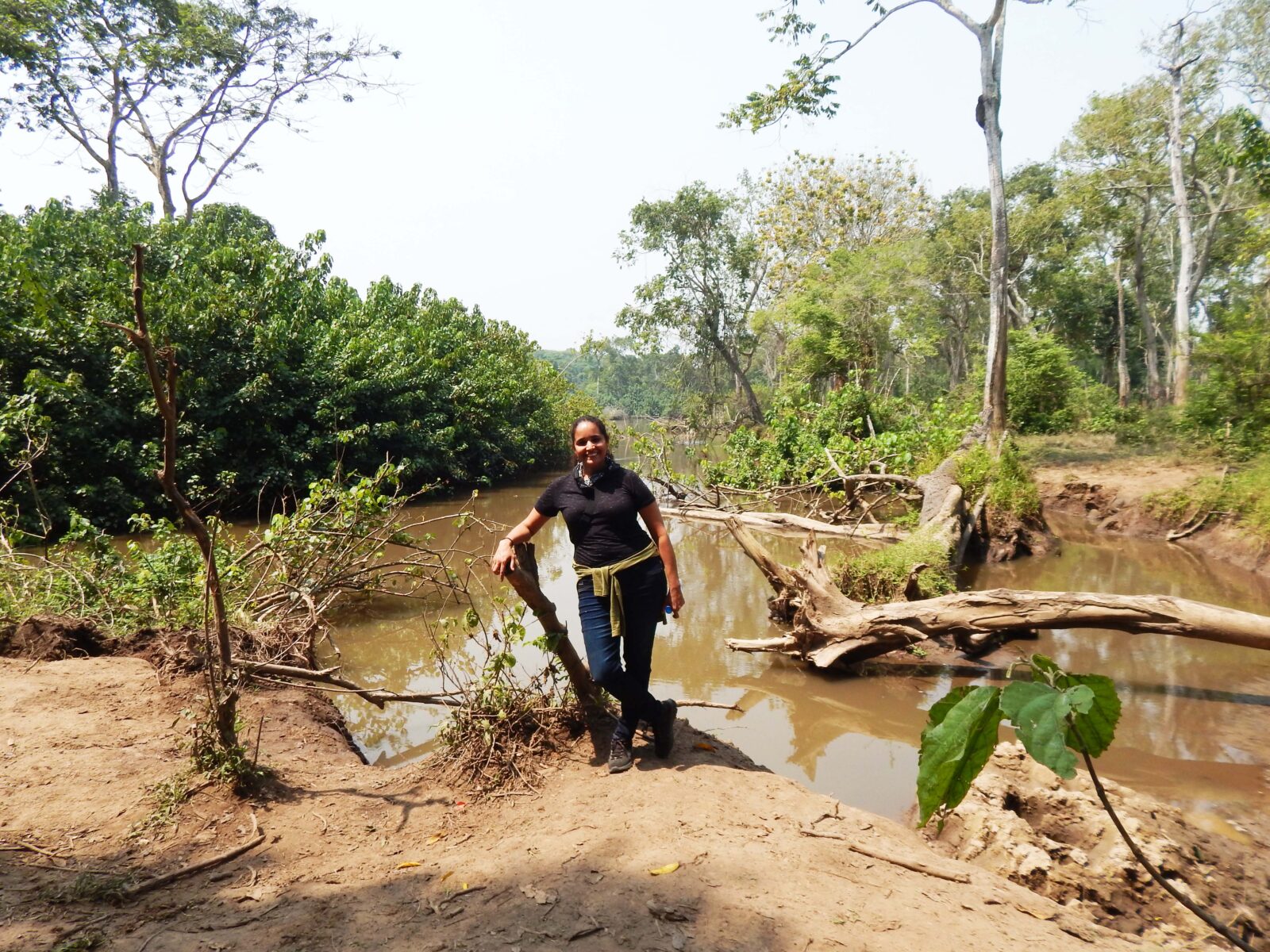

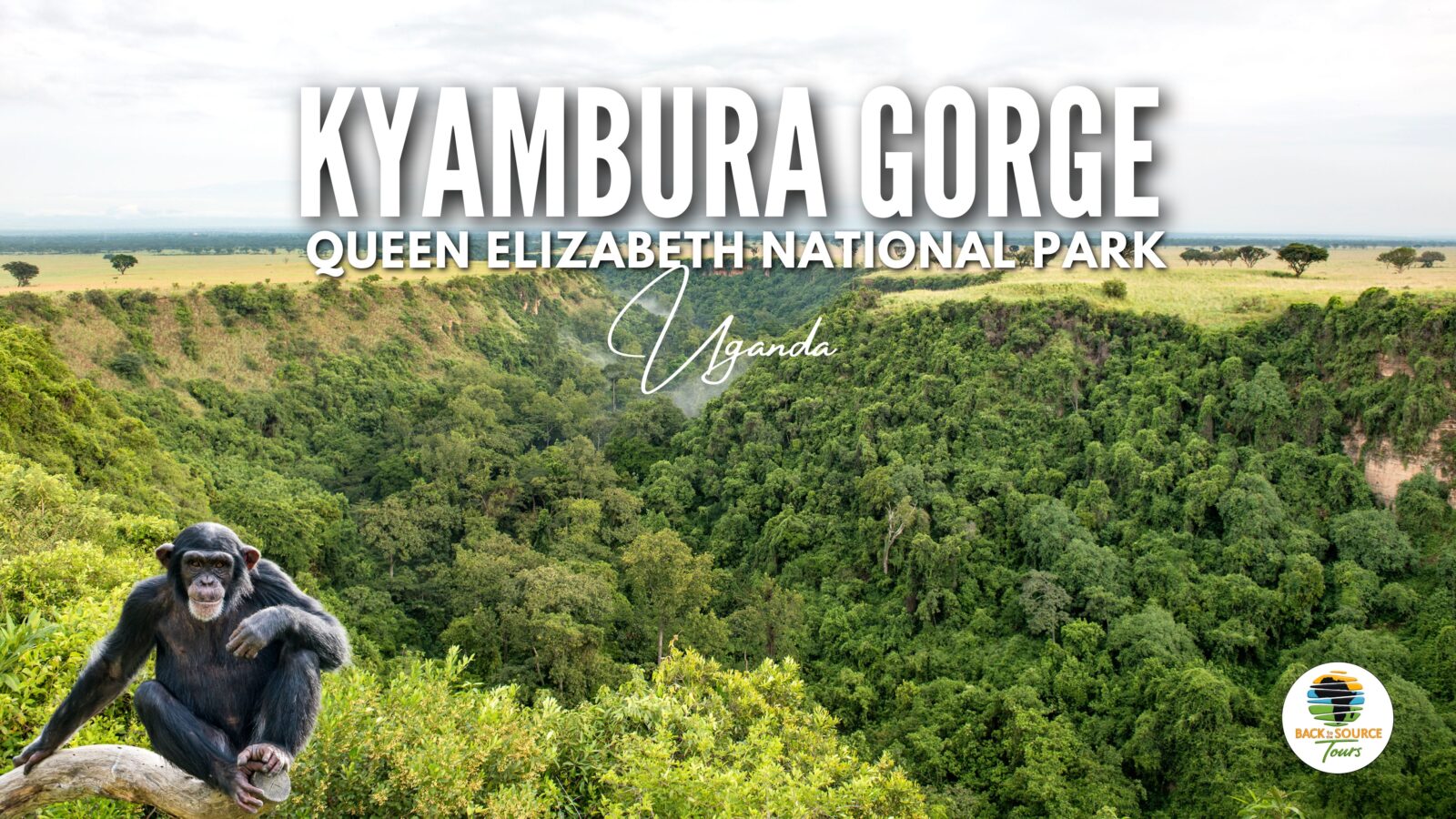
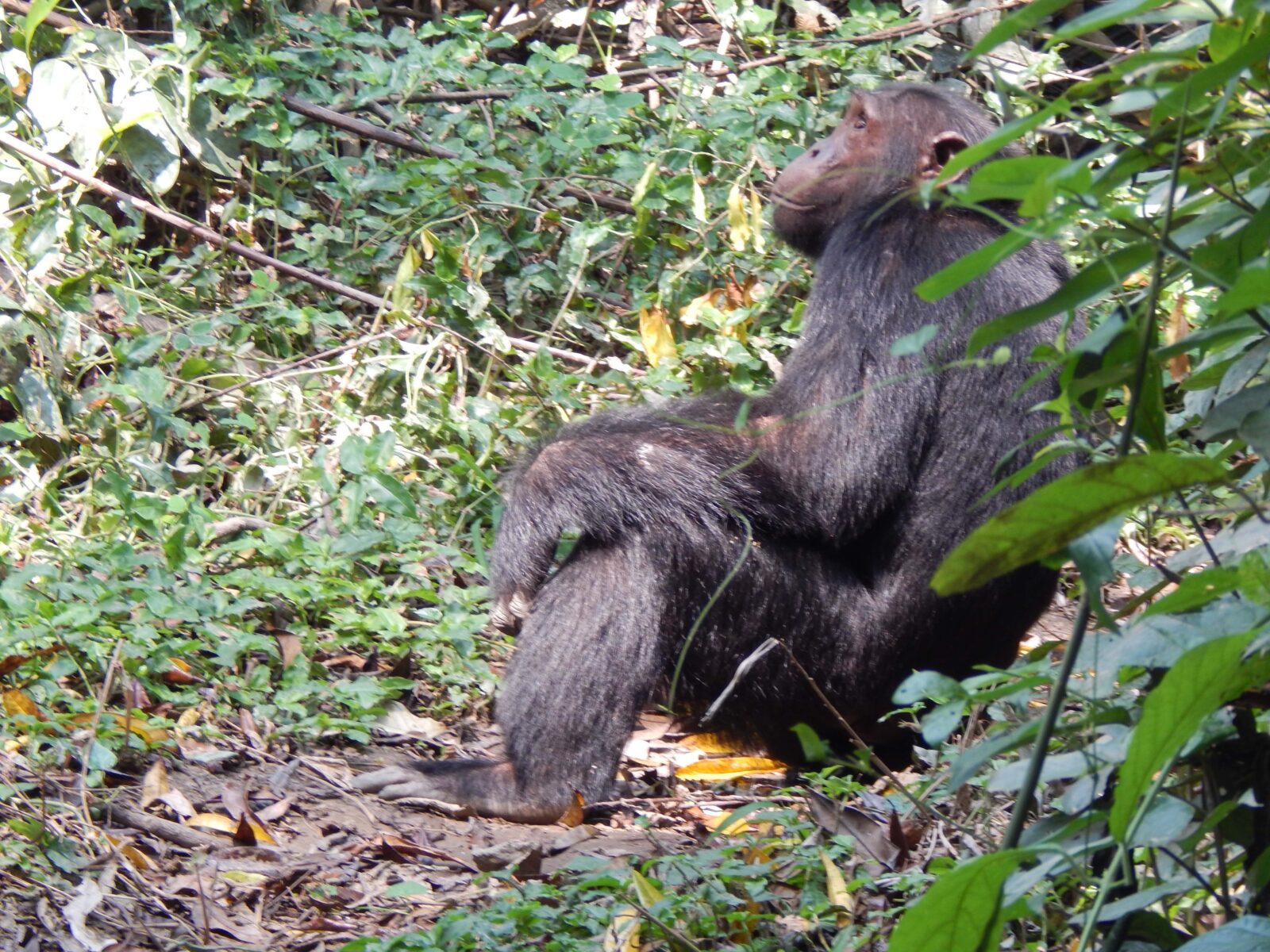
Kyambura Gorge is a dramatic, forested river gorge that cuts through the savannah landscape of Queen Elizabeth National Park’s eastern section. From above, at the gorge rim, you look down into a dense green canyon that descends twenty meters below the surrounding savannah. Inside the gorge, a habituated chimpanzee community and various other primate species live in a forest habitat that feels entirely separate from the open landscape surrounding it. The temperature drops the moment you descend. The acoustic shifts from the open savannah to the enclosed, reverberant sound of a forest canyon. And somewhere in the canopy above, the chimpanzees announce themselves with rising pant-hoot calls that are among the most thrilling sounds in the natural world.
Why Kyambura Gorge Is Called the Valley of the Apes
Kyambura Gorge is also known as the Valley of the Apes. This underground forest is about 1 kilometer wide, 32 kilometers long, and 100 meters deep. The name Kyambura means “I couldn’t find it,” a reference to a historical flood that swept away people and property and left nothing findable in its aftermath.
The chimpanzees of Kyambura Gorge are a community cut off from other forest populations by the destruction of the forest corridor that once connected them to Maramagambo and Kalinzu Forests. This forest corridor was completely destroyed by humans through deforestation and settlement. The only path to the other forests is through savanna grassland full of predators like lions, leopards, and hyenas. Given those dangers, the chimps had no alternative but to remain in the gorge and forge a life for themselves. The Jane Goodall Institute and Volcanoes Safaris Partnership Trust have supported the community by planting trees along the former corridor to restore connectivity over time.
Chimpanzee Trekking in Kyambura Gorge — What to Expect
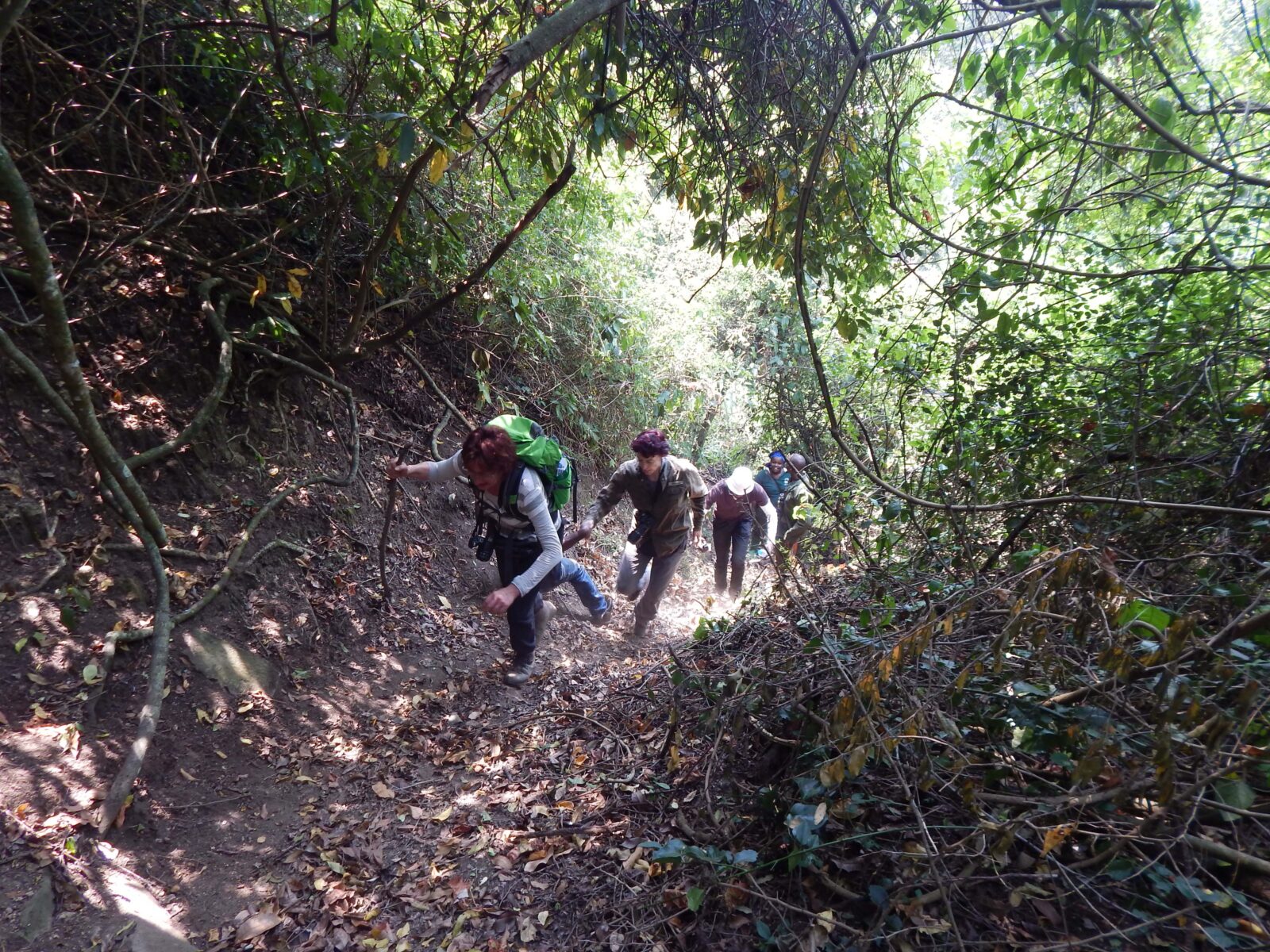
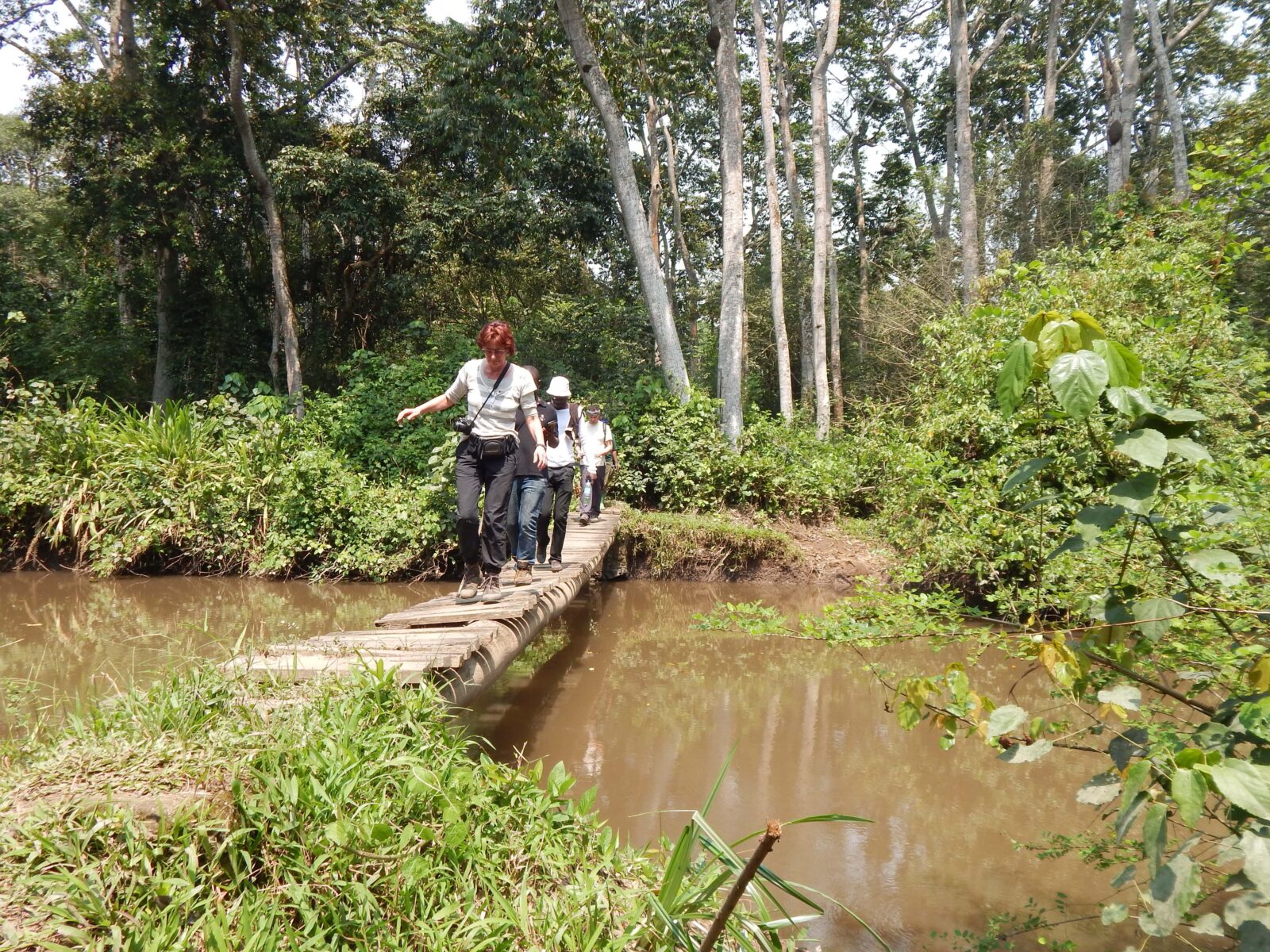
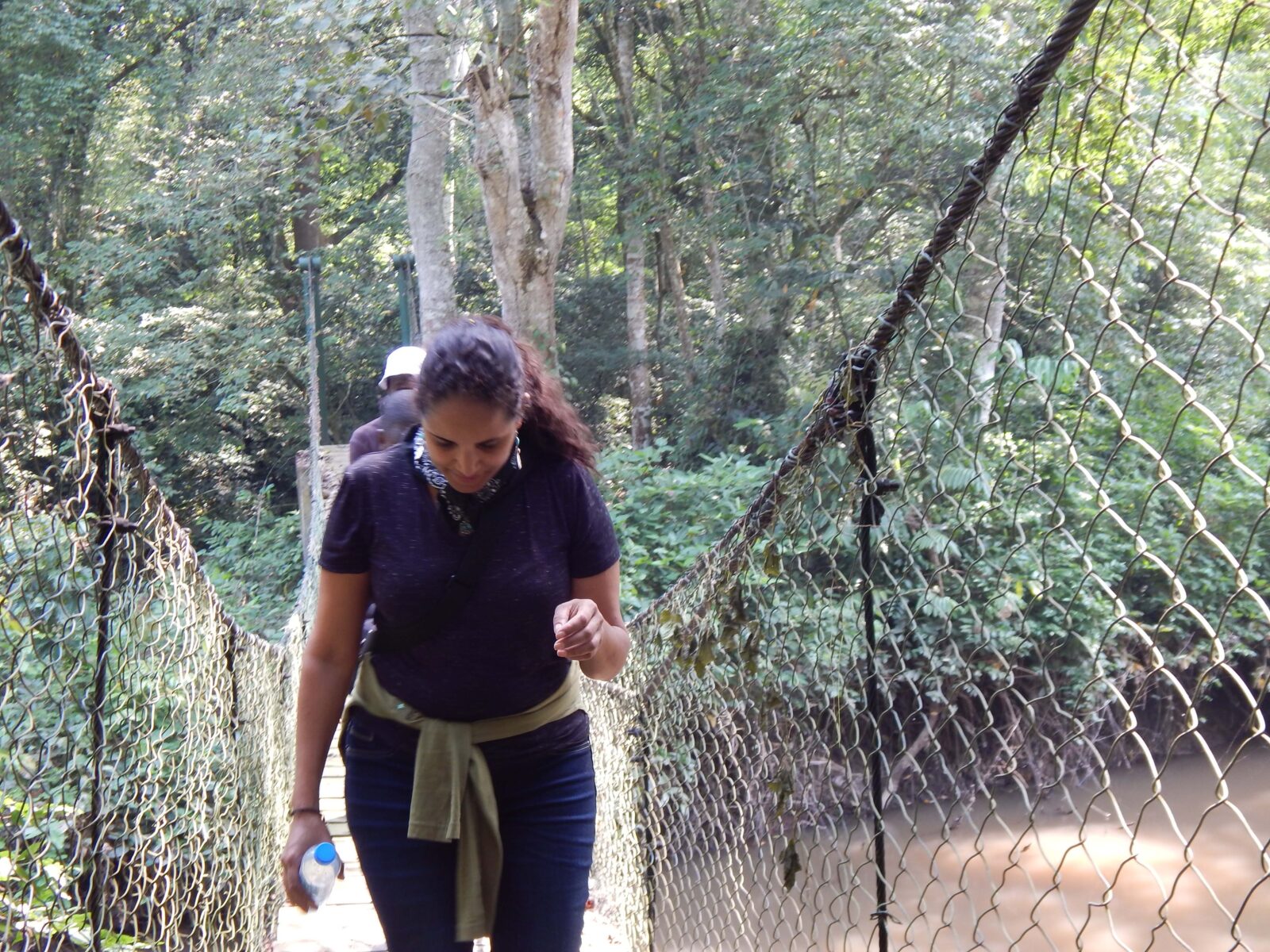
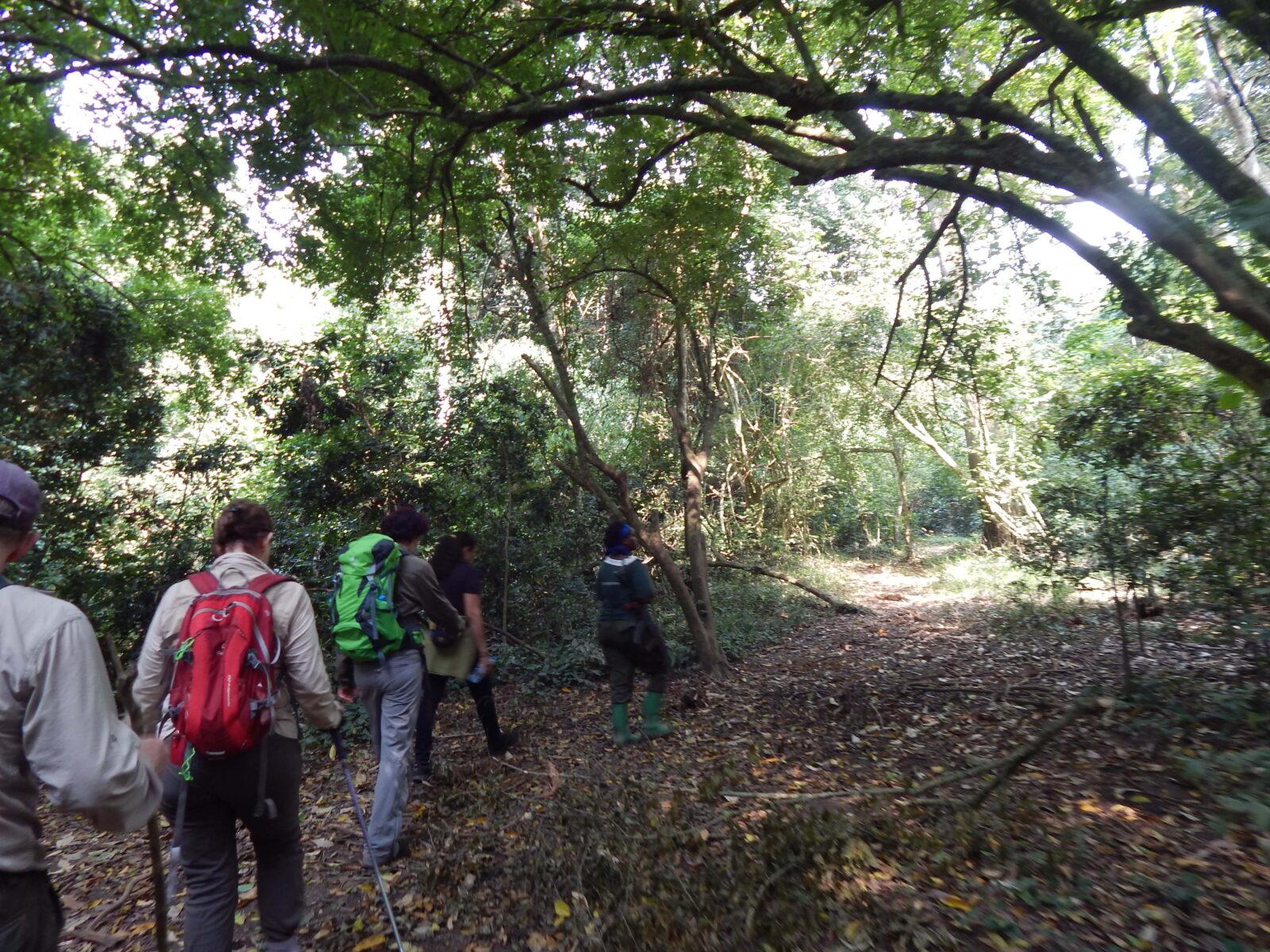
The chimp trek starts with a 200-meter descent down the escarpment followed by a 2 to 3 hour walk through thick vegetation. The chimpanzees are used to humans and will often interact and come closer, a great opportunity for photographs. Sightings are about 80% percent. The only place with better chances of sightings is Kibale National Park.
Once you find the chimps, you spend one hour observing them at close range as they feed, play, socialize, groom, and move through the canopy. The warm relationship of these great apes toward human presence will leave you awe-inspired about their life in the wild Kyambura Gorge.
Wildlife Beyond the Chimpanzees
Besides chimpanzees, Kyambura Gorge is home to black-and-white colobus monkeys, red-tailed monkeys, giant forest hogs, vervet monkeys, olive baboons, bushbucks, and many bird species including the blue-headed bee-eater, African finfoot, martial eagle, Verreaux’s eagle-owl, and occasionally the rare shoebill. Hippos and elephants are also encountered seasonally near the gorge floor.
Permit Details and Practical Information
Chimpanzee trekking permits cost $285.00 USD per person. Children under 12 years and people with active infections are not allowed to trek. Trekking sessions depart daily at 8:00 AM and 1:00 PM.
Permits should be booked well in advance especially during peak season from June to September. Back to the Source Tours arranges all permits as part of your Uganda safari booking.
How to Get to Kyambura Gorge
Kyambura Gorge is approximately 389 kilometers southwest of Kampala. The gorge is located about 30 kilometers northeast of Queen Elizabeth National Park headquarters at Mweya. From Kampala the drive takes 6 to 7 hours by road. Chartered flights from Entebbe or Kajjansi Airfield to Mweya airstrip reduce travel time significantly.
How to Include Kyambura Gorge in Your Uganda Safari
Kyambura Gorge is an optional activity in the Back to the Source Tours 12-Day Primates Wildlife and Culture Uganda safari and can be added to any Queen Elizabeth National Park itinerary. It pairs naturally with the Kazinga Channel boat cruise and Ishasha sector tree-climbing lions as part of a full Queen Elizabeth experience.
Must-Do Activities in Kyambura
1. Morning Chimp Trek
Duration: 3–5 hours total
Begin at dawn with a ranger briefing, then descend into the cool forest. The trek is moderately strenuous but richly rewarding, culminating in a face-to-face hour with chimpanzees.
2. Guided Birding Walks
Duration: 2–3 hours
Slow-paced walks along the gorge rim and floor reveal rainforest and savannah edge species. Expert birding guides point out endemic and migratory species, making this a hotspot for twitchers.
3. Evening Nature Walk & Night Safari
Duration: 2 hours
As daylight fades, explore the rim trails for signs of nocturnal life—bush babies, civets, and owls—under the glow of your headlamp, guided by experienced rangers.
4. Community & Cultural Encounters
Duration: 2–4 hours
Visit nearby Katunguru Village to meet local families, learn traditional crafts like basket weaving and bark cloth making, and share stories around a fire. Proceeds support village schools and health initiatives.
5. Tea & Coffee Farm Tours
Duration: Half-day
Tour hillside plantations where you pick fresh tea leaves or coffee cherries, learn processing techniques, and sample brews. This hands-on experience highlights sustainable farming practices.
6. Top of Kyambura Viewpoint
Duration: 1–2 hours
For vistas that rival the Serengeti plains, drive or hike to the rim’s lookout point. Witness the gorge’s narrow green ribbon cutting through golden grasslands—especially stunning at sunrise or sunset.




Wildlife & Wilderness Highlights
Chimpanzee Trekking:
Kyambura is home to one habituated chimpanzee community, numbering around 80 individuals. Guided by UWA rangers, visitors trek 2–3 hours through the gorge floor’s tangled vines and giant figs to spend up to one hour observing chimps in their arboreal playground—nursing young, foraging for fruit, and performing acrobatic leaps.
Other Primates:
-
Red-tailed monkeys
-
Black-and-white colobus monkeys
-
Blue monkeys
-
Olive baboons
Birdlife:
-
Grey parrot
-
African green broadbill
-
Black-and-white casqued hornbill
-
Great blue turaco
-
Ruwenzori turaco
Mammals & More:
-
Bushbucks, giant forest hogs, and sitatungas in the swampy sections
-
Reptiles like monitor lizards and various chameleon species
-
Butterflies numbering in the hundreds of species
Getting There: Distances & Transportation
-
By Road from Kampala/Entebbe:
Drive west for approximately 360 km (6–7 hours) to Kasese via Fort Portal, then follow the park road south for 55 km to the Kyambura Ranger Station within Queen Elizabeth NP. -
Air Routes:
Charter flights from Entebbe or Kajjansi land at Kasese Airstrip (1 hour), followed by a 1 hour drive to Kyambura. Helicopter transfers can also deposit you directly at the Mweya Airstrip or park headquarters for a shorter overland route. -
From Other Parks:
-
Bwindi Impenetrable NP: ~65 km north via Kisoro (3 hours by road)
-
Murchison Falls NP: ~500 km northeast (charter flight recommended)
-
Whether you opt for a scenic drive along the Rwenzori foothills or a quick charter hop, the journey to Kyambura sets the stage for adventure.