

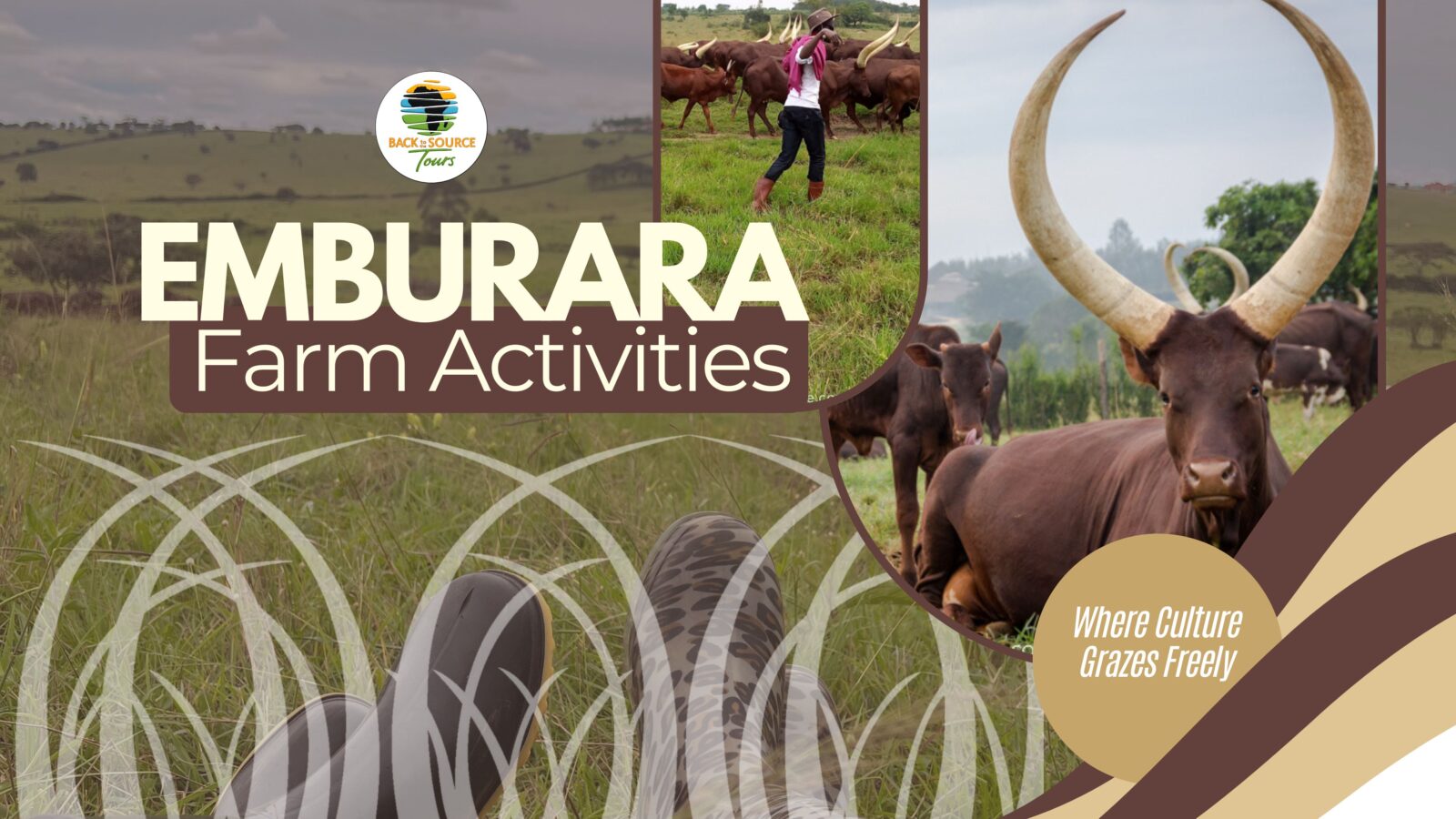
Emburara Farm cultural activities give travelers a meaningful look into Ankole cattle culture near Mbarara in western Uganda. This experience moves beyond a quick cultural stop because it invites guests into the rhythm of farm life, cattle keeping, food traditions, storytelling, and rural hospitality. As a result, it works beautifully inside a Uganda safari that connects wildlife, culture, conservation, and community.
The heart of the experience centers around the famous Ankole longhorn cattle. These graceful cattle carry deep value among the Banyankole people, where they represent heritage, pride, wealth, food, and family identity. However, the visit does not focus on cattle alone. Guests may also experience traditional cooking, ghee making, medicinal gardens, banana groves, firewood preparation, music, dance, and relaxed conversations with local hosts.
Back to the Source Tours can include Emburara Farm as part of a western Uganda route with Lake Mburo National Park, Queen Elizabeth National Park, and Bwindi Impenetrable Forest. This pairing gives travelers wildlife, farm culture, savannah, conservation, and gorilla trekking in one well planned journey.
Why Visit Emburara Farm in Western Uganda?
Emburara Farm belongs in a Uganda itinerary because it adds cultural depth between major wildlife destinations. Many safaris move quickly from park to park, yet this experience slows the journey in the best possible way. Travelers learn how cattle, land, food, family, and tradition connect in the Ankole region. Meanwhile, the farm setting gives the day a warm and personal feeling.
The experience works well for travelers who want more than sightseeing. For example, guests can join farm tasks, listen to local stories, taste traditional foods, and learn why Ankole cattle remain central to western Uganda’s identity. At the same time, the visit supports a stronger travel story because it connects people and place. Wildlife shows the beauty of Uganda’s protected areas. By contrast, Emburara shows the living heritage that surrounds those landscapes.
Back to the Source Tours recommends this experience for culture focused travelers, families, photographers, private groups, and guests who enjoy hands on learning. It also supports responsible travel because visitors engage with local knowledge, food traditions, and rural livelihoods. The result feels grounded, respectful, and memorable without turning culture into a performance.
Where Is Emburara Farm Located?
Emburara Farm sits near Mbarara, one of western Uganda’s most important gateway cities. This location makes it easy to include the experience between Lake Mburo National Park and other major safari destinations. Because Mbarara connects the route toward Queen Elizabeth National Park, Bwindi Impenetrable Forest, and southwestern Uganda, the farm fits naturally into a broader itinerary.
Travelers often visit Emburara after exploring Lake Mburo National Park, where walking safaris, boat trips, zebras, impalas, and giraffes create a strong wildlife opening. Afterward, Emburara shifts the journey into culture, food, and cattle heritage. This transition works well because both experiences share the landscape of western Uganda, yet each offers a different kind of connection.
The route also works in reverse. Guests returning from Bwindi or Queen Elizabeth National Park can add Emburara as a meaningful cultural pause before continuing toward Entebbe or Kampala. At the same time, Back to the Source Tours can adjust the timing based on road conditions, activities, group size, and traveler energy.
Recent Cultural Tourism Update for Ankole Cattle
Ankole cattle cultural tourism continues to gain stronger attention in Uganda because travelers want more than scenic stops. They want stories, people, food, heritage, and genuine connection. A recent New Vision travel report on long horned Ankole cattle tourism highlighted how the cattle experience brings together pastoral life, culture, cuisine, music, landscapes, and respectful visitor engagement.
This update strengthens the value of Emburara Farm cultural activities inside a Uganda safari. The experience gives travelers a respectful way to understand the relationship between cattle, identity, family life, and western Uganda’s landscape. Meanwhile, it supports the wider shift toward travel that feels personal, educational, and rooted in place.
For Back to the Source Tours, this matters because a strong itinerary should do more than move guests between parks. It should help travelers understand why each region feels different. As a result, Emburara Farm becomes a strategic cultural stop, not a filler activity with a nice view and a handshake.
Ankole Longhorn Cattle and Banyankole Heritage
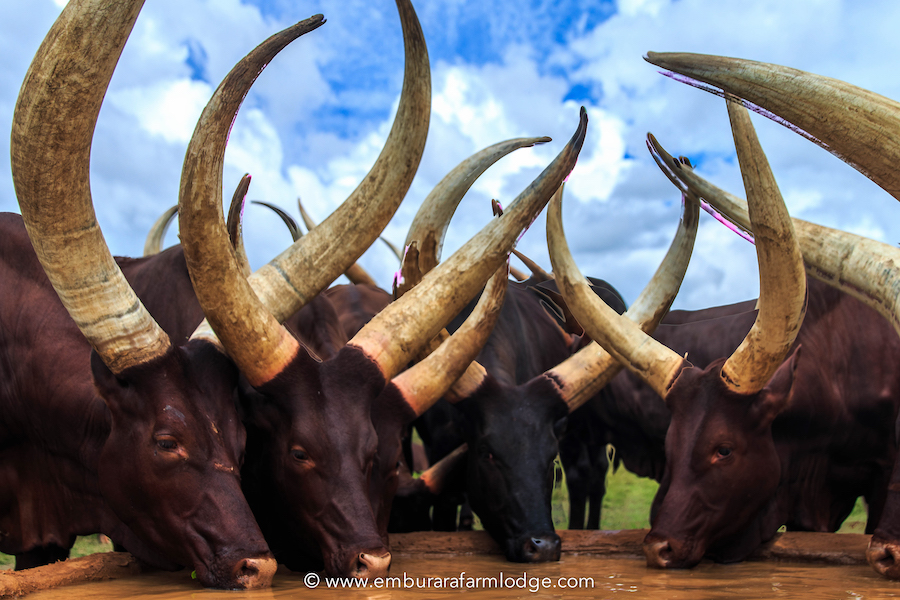
Ankole longhorn cattle give Emburara its strongest cultural identity. Their wide horns, calm presence, and striking coats make them unforgettable. However, their importance goes far beyond appearance. Among the Banyankole people, cattle represent family wealth, social identity, food security, ceremony, and continuity across generations.
During the visit, guests can learn how cattle keeping shapes daily life. Hosts may explain the meaning of the kraal, the value of milk, the use of gourds, and the role of cattle in marriage, hospitality, and community life. Meanwhile, travelers see how patience, skill, and routine define the work. This is not a staged shortcut through culture. It is a practical look at a living pastoral tradition.
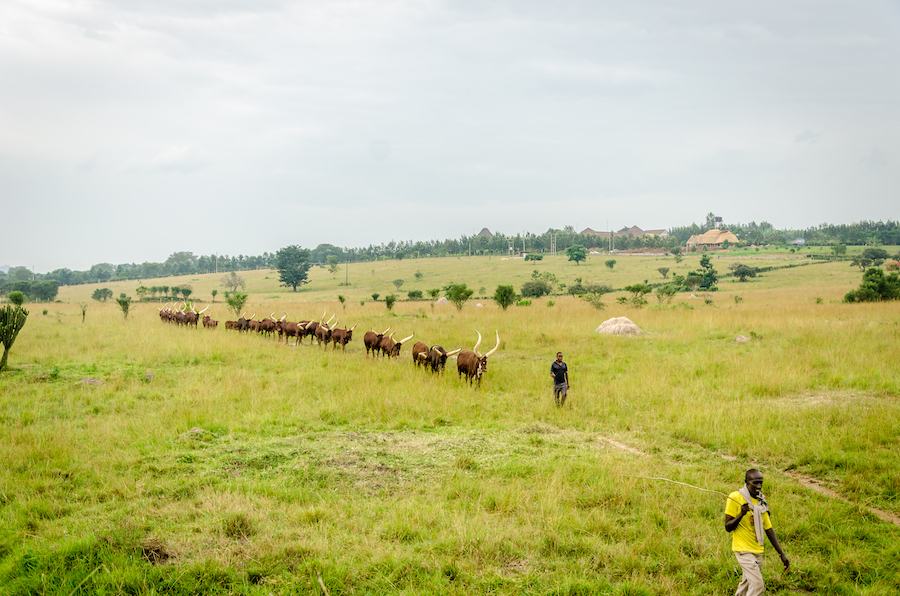
The cattle also create a beautiful photography experience, especially when the herd moves across open ground or gathers near the kraal. Even so, the best moments often come through conversation. Guests begin to understand why these animals remain a source of pride in western Uganda. As a result, the experience adds emotional weight to a safari that might otherwise focus only on wildlife sightings.

Hands On Farm Activities at Emburara Farm
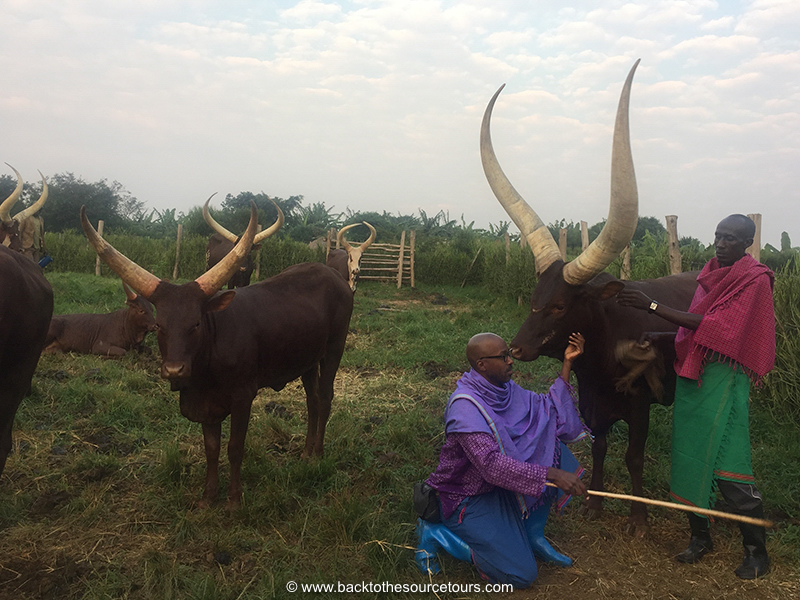
The Emburara Farm cultural activities can include several hands on experiences, depending on timing and local arrangements. Guests may watch or join Ankole cow milking, cattle herding, calf release, milk gourd cleaning, cattle watering, and traditional cow care. Because each activity follows the farm’s daily rhythm, the experience feels practical and real.
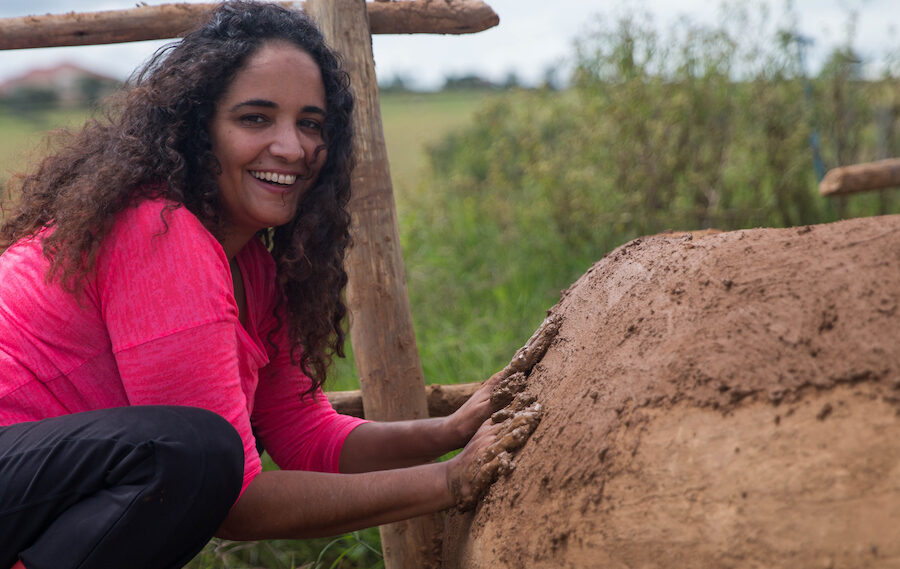
One memorable activity involves cleaning the cattle with enkuyo, a traditional bundle of sisal material. This gentle process removes dirt from the cow’s body and also shows the care given to prized animals. Meanwhile, calf release gives guests a warm view of how young calves reunite with their mothers for feeding. These small moments help travelers understand the relationship between farmers and their herd.
Some guests may also learn about Okwakirira, a traditional milk processing method using pots and gourds. Others may observe Okuseetura, when cattle move out for grazing after milking. These activities create a stronger cultural experience because guests see the system, not just the final product. Back to the Source Tours can confirm the best activity flow before the visit.
Traditional Milk Processing and Ghee Making
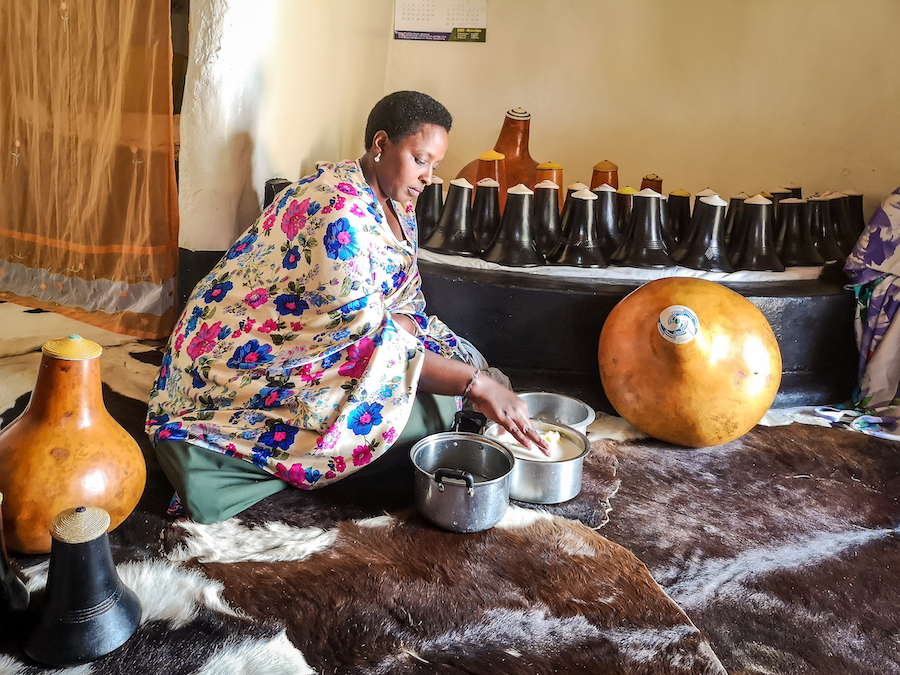
Milk processing gives travelers one of the most important windows into Ankole food culture. Fresh milk plays a central role in daily life, hospitality, and family routines. At Emburara, guests may learn how local hosts handle milk, clean traditional vessels, store dairy products, and prepare ghee through practiced techniques.
The ghee making experience helps travelers understand how food knowledge moves across generations. Hosts may explain how fermented milk, gourds, patience, and careful handling shape the final product. Meanwhile, guests see that traditional food preparation requires skill, timing, and respect for ingredients. Nothing about the process feels rushed, which is exactly the point.
This activity also supports stronger storytelling in a Uganda itinerary. A traveler may begin the day seeing cattle in the kraal, then later understand how milk becomes food, value, and memory. As a result, the farm experience connects livestock, women’s knowledge, household skills, and cultural identity. It also gives food lovers a deeper reason to appreciate western Uganda beyond scenery and safari drives.
Medicinal Gardens, Banana Groves and Nature Walks
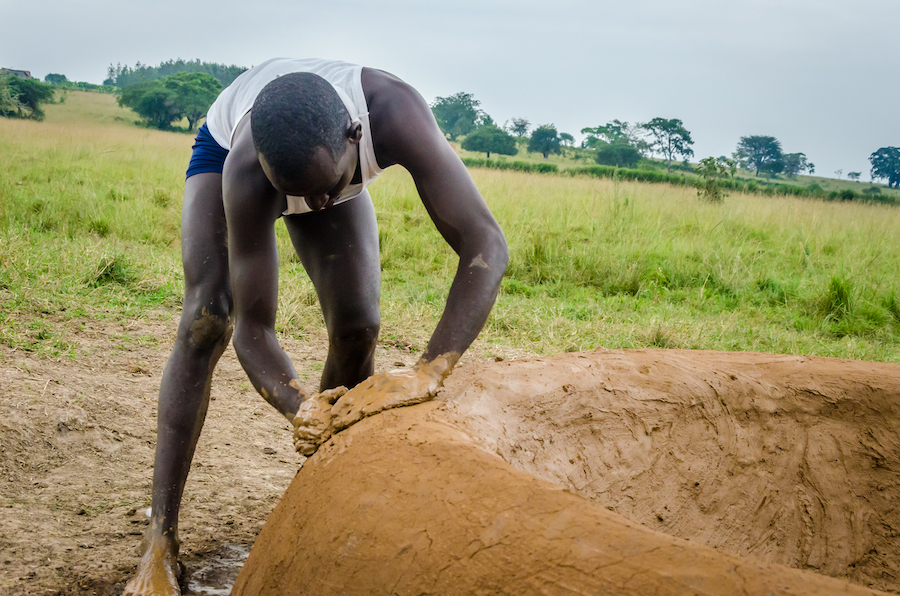
Emburara Farm also gives travelers access to gardens, banana groves, and quiet walking areas where local knowledge becomes part of the experience. These areas help guests understand how rural households use plants for food, shade, medicine, and daily life. Meanwhile, the slower walking pace creates space for conversation with local hosts.
During a guided walk, guests may learn how different plants support health, cooking, household needs, and environmental balance. The experience can also include food preservation stories, garden work, or simple explanations about how families use available natural resources. Because the walk stays close to the farm setting, it feels accessible for many travelers.
This nature based section pairs well with wildlife activities in western Uganda. For example, guests who visit Lake Mburo National Park may first explore savannah and lakes, then shift into farm landscapes and cultural knowledge. By contrast, travelers continuing toward Bwindi Impenetrable Forest can use Emburara as a gentle bridge between open country and rainforest.
Evening Music, Dance and Bonfire Storytelling
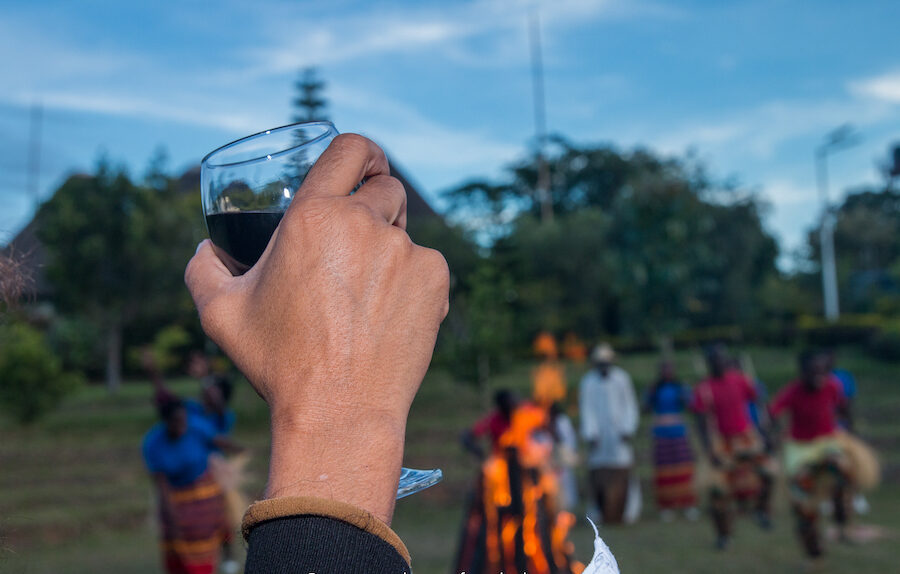
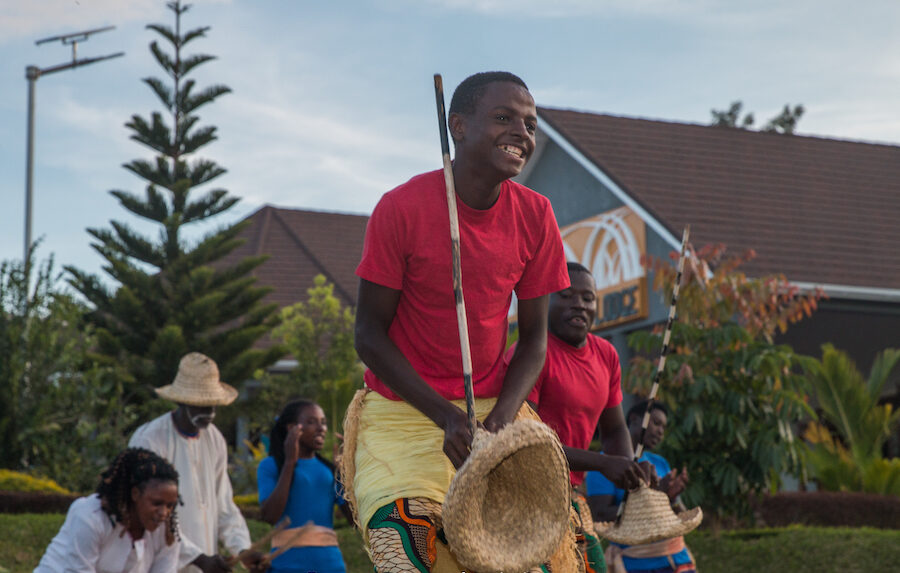
Evening activities at Emburara Farm can add a joyful close to the cultural experience. Guests may enjoy local song, dance, drumming, storytelling, and conversation around a bonfire. This setting creates a warm social atmosphere after a day of cattle activities, cooking, gardens, and farm learning.
The music and dance help travelers feel the celebratory side of western Uganda’s culture. However, the experience works best when guests approach it with respect and openness. Participation should feel natural, not forced. Some travelers may join the rhythm, while others may prefer to listen, watch, and enjoy the atmosphere.
Back to the Source Tours includes cultural experiences because they help travelers understand Uganda through people, not only landscapes. At the same time, we believe these moments need care. The strongest cultural encounters respect local hosts, community value, and traveler curiosity. When planned well, the bonfire experience becomes more than entertainment. It closes the day with warmth, memory, and a strong sense of place.
How Emburara Farm Fits Into a Western Uganda Safari Route
Emburara Farm fits naturally into a western Uganda route because it sits near the travel corridor between Lake Mburo National Park, Mbarara, Queen Elizabeth National Park, and Bwindi Impenetrable Forest. This location allows travelers to add culture without breaking the safari flow. Instead, the experience strengthens the journey.
Back to the Source Tours includes Emburara in our Walking Safari Uganda 9 Day Wildlife and Culture Tour. In that route, travelers begin with Lake Mburo, then continue into Ankole farm culture before reaching Queen Elizabeth and Bwindi. This sequence works well because each stop builds on the previous one.
The route starts with wildlife on foot, then moves into cattle heritage, food, and rural life. Afterward, travelers continue toward game drives, the Kazinga Channel, and mountain gorilla trekking. As a result, Emburara does not feel like an extra stop. It becomes the cultural link that gives the itinerary a stronger identity.
Suggested Emburara Farm Experience Flow
Morning Cattle and Milking Experience
A strong Emburara visit can begin with the cattle routine. Guests may watch or join milking, learn how farmers handle the cows, and observe calf care. This timing works well because the morning often carries cooler air, softer light, and a more active farm rhythm. Meanwhile, guides can explain why cattle hold such importance in Ankole life.
Midday Food and Ghee Making
After the morning activities, the experience can shift toward food traditions. Guests may learn about milk processing, ghee making, cooking, and local ingredients. This part of the day connects the cattle experience to household knowledge. It also gives travelers a better understanding of how food, work, and hospitality come together.
Afternoon Walks and Evening Culture
The afternoon can include gardens, banana groves, storytelling, or relaxed farm walks. Later, music, dance, and bonfire conversation can close the day with warmth. Back to the Source Tours can adjust the flow based on arrival time, traveler interests, and the wider safari schedule.
Suggested Emburara Farm Experience Flow
Morning Cattle and Milking Experience
A strong Emburara visit can begin with the cattle routine. Guests may watch or join milking, learn how farmers handle the cows, and observe calf care. This timing works well because the morning often carries cooler air, softer light, and a more active farm rhythm. Meanwhile, guides can explain why cattle hold such importance in Ankole life.
Midday Food and Ghee Making
After the morning activities, the experience can shift toward food traditions. Guests may learn about milk processing, ghee making, cooking, and local ingredients. This part of the day connects the cattle experience to household knowledge. It also gives travelers a better understanding of how food, work, and hospitality come together.
Afternoon Walks and Evening Culture
The afternoon can include gardens, banana groves, storytelling, or relaxed farm walks. Later, music, dance, and bonfire conversation can close the day with warmth. Back to the Source Tours can adjust the flow based on arrival time, traveler interests, and the wider safari schedule.
Responsible Cultural Travel at Emburara Farm
Responsible cultural travel matters at Emburara Farm because guests enter a living heritage space. Travelers should ask before taking close photos, listen to host guidance, and approach each activity with respect. Guests should also avoid treating farm work or traditional practices as entertainment only. These activities carry meaning for the people who practice them.
Back to the Source Tours encourages travelers to participate with curiosity and humility. During cattle activities, guests should follow instructions carefully because animals need calm handling. During cooking or ghee making, travelers should respect the process and allow hosts to guide each step. Meanwhile, cultural performances deserve the same respect as any formal presentation.
This approach improves the experience for everyone. Hosts share more freely when guests show genuine interest. Travelers also gain stronger insight because they pay attention to the details behind each activity. As a result, the visit supports better cultural exchange, community value, and a more thoughtful Uganda safari.


Pair Emburara Farm With Nearby Uganda Safari Highlights
Emburara Farm pairs especially well with Lake Mburo National Park. Travelers can enjoy zebras, impalas, giraffes, walking safaris, boat trips, and birding before shifting into Ankole cattle culture near Mbarara. This combination gives the itinerary excellent contrast without forcing long detours.
The route can also continue to Queen Elizabeth National Park, where guests can experience game drives, the Kazinga Channel, crater scenery, and the Ishasha sector. Afterward, the journey can continue toward Bwindi Impenetrable Forest for gorilla trekking.
For travelers who want a complete Uganda story, this route works very well. It brings together walking safari, cattle heritage, food culture, savannah wildlife, water based safari, and rainforest primates. Meanwhile, Back to the Source Tours manages the pacing so each experience has enough time to breathe.
Plan Emburara Farm Cultural Activities With Back to the Source Tours
Emburara Farm cultural activities give travelers a richer understanding of western Uganda. The experience brings together Ankole cattle, traditional milking, ghee making, cooking, storytelling, gardens, music, dance, and rural hospitality. Because of that, it adds depth to Uganda safaris that would otherwise focus only on national parks.
Back to the Source Tours can include Emburara in private safaris, group tours, family trips, cultural journeys, photography routes, and conservation focused itineraries. We can also connect the experience with Lake Mburo National Park, Queen Elizabeth National Park, Bwindi Impenetrable Forest, and other western Uganda highlights.
Start with East Africa Tour Packages, explore East Africa Group Tours, or complete the East Africa Safari Travel Form for a custom Uganda safari plan.