
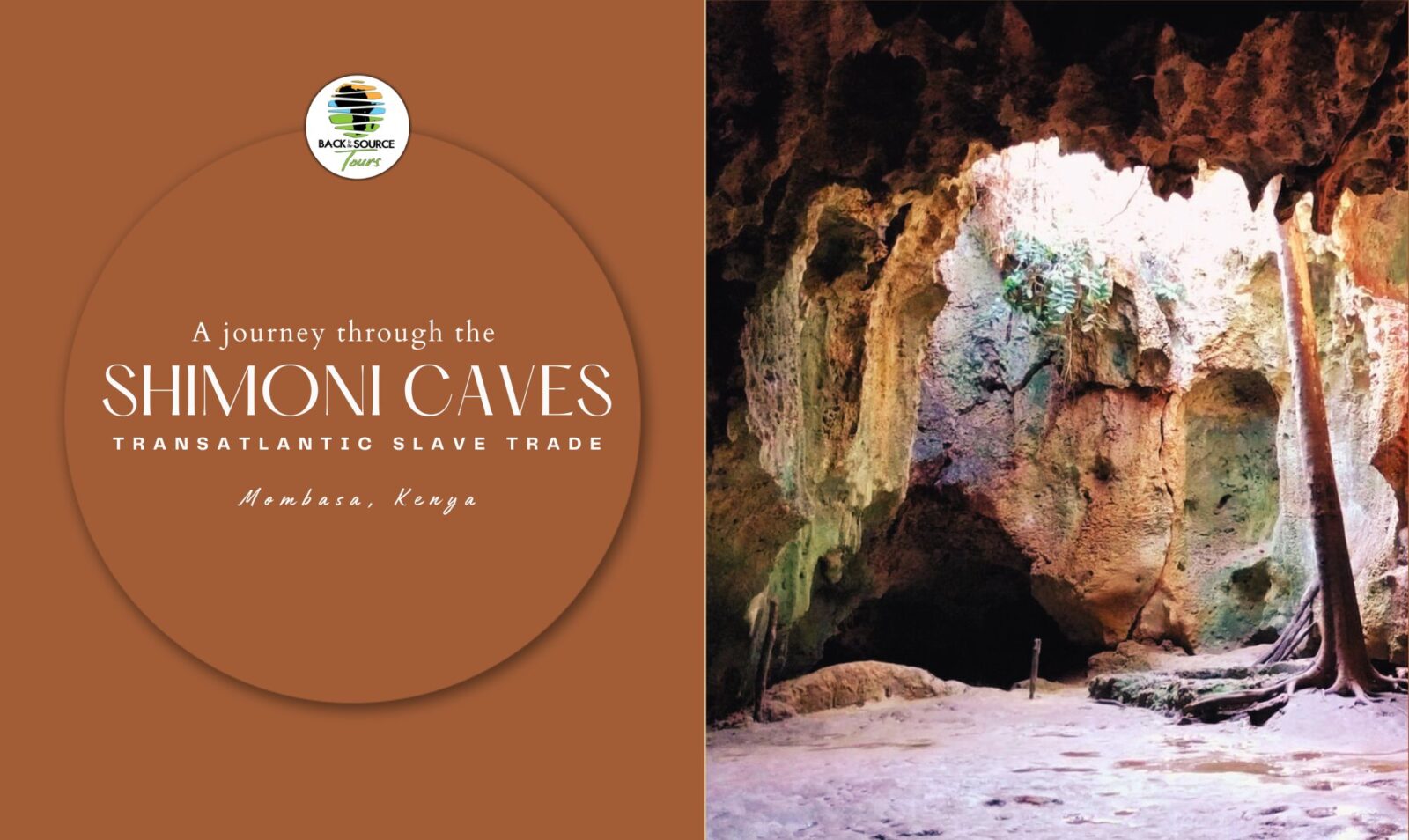
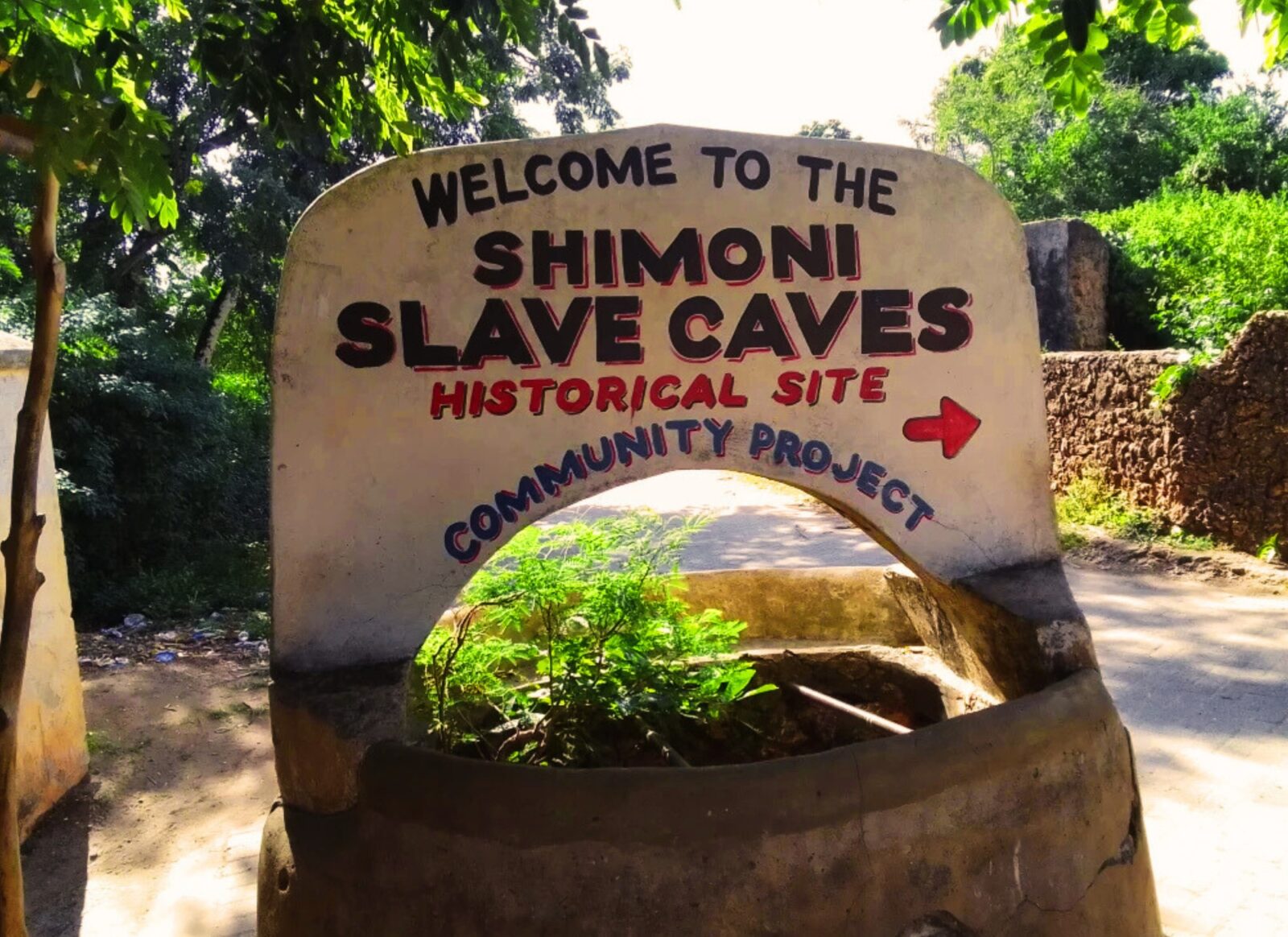
Some places are beautiful. Others are historically significant. The Shimoni Slave Caves are both, and yet neither description comes close to preparing you for the experience of actually standing inside them.
Located in the small fishing village of Shimoni, approximately 80 km south of Mombasa and 60 km south of Diani Beach, the Shimoni Slave Caves are one of the most powerful and important historical sites on the East African coast. They are not comfortable to visit. They were never meant to be. What they are is honest, unflinching, and deeply human, which makes them one of the most valuable experiences available anywhere in Kenya.
Visiting here is also, without question, the right thing to do. Every entry fee goes directly back into the Shimoni community, funding school scholarships, teacher salaries, medical supplies, and community welfare programmes. History, in this case, is a direct investment in a living community. Back to the Source Tours includes the Shimoni Slave Caves as part of a full south-coast day programme. Contact us at info@backtothesourcetours.com to plan your visit
The History of the Shimoni Slave Caves: What Happened Here
The name Shimoni comes from the Swahili for “place of the hole,” derived from the natural coral cave system running approximately five kilometers beneath this stretch of coastline. Long before the slave trade arrived, the caves held a different significance entirely.
Local folklore tells that the caves were first used as sacred sites by Kaya elders for prayer, ritual offerings, and protection during times of conflict. People running from warring neighbors sheltered in these passages. The caves were, in those earlier centuries, a place of refuge. That history makes what came next considerably darker by contrast.
Starting in the 1750s, Shimoni became one of East Africa’s primary slave-holding ports, part of a trade network that stretched from South Africa to the Middle East. Enslaved people, captured from communities as far inland as the Great Lakes region and Uganda, were marched to the coast under brutal conditions. Historians have recorded that up to five enslaved people died carrying a single tusk of ivory from the interior to the coast, a detail that frames the scale of human cost before the caves even come into view.
Those who survived the march were held inside the coral cave system, chained to the walls in severe overcrowding and darkness, awaiting shipment across the Indian Ocean. Each month, approximately a thousand enslaved people were processed through Shimoni before being loaded onto Arab dhows and transported to the slave markets of Zanzibar, Pemba, Oman, Persia, India, and beyond. The stone tanks where they were kept, fed on dates and little else, are still visible. So are the iron rings cemented into the rock walls where chains once held people in place.
The caves also offered one additional, devastating function. Their seaward passages once gave direct access to the beach, allowing enslaved people to be loaded directly onto waiting vessels without being seen from inland. The geography of the site was not coincidental. It was chosen precisely because of it.
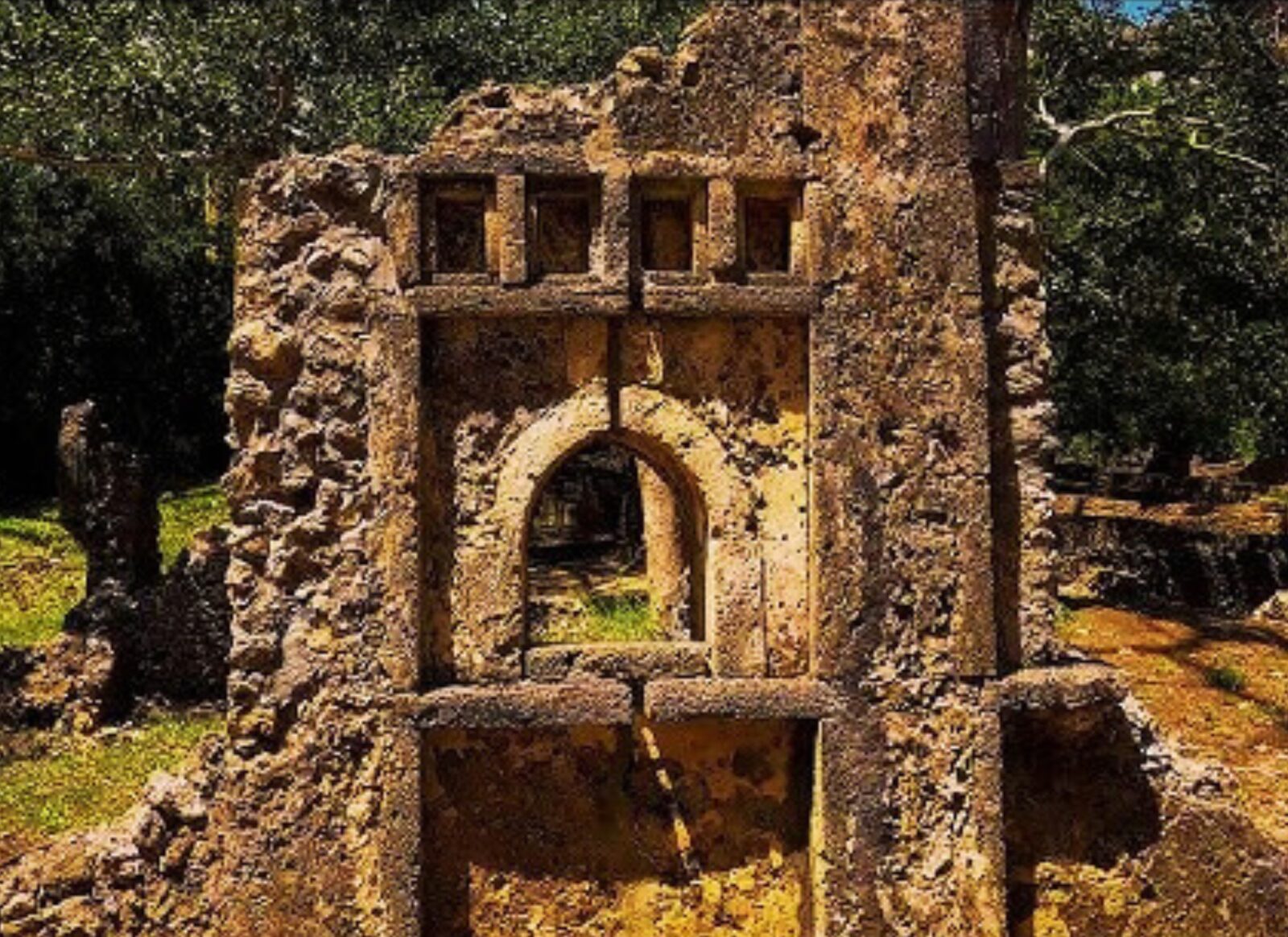
In 1857, the British Parliament enacted an international ban on the slave trade. By 1873, slavery was officially abolished in Kenya. In the 1870s, British diplomatic pressure successfully persuaded Barghash ibn Said, the Sultan of Zanzibar, to acknowledge the ban, effectively ending Shimoni’s role in the trade network. The British Imperial East Africa Company subsequently established its regional headquarters in Shimoni in 1885, erecting colonial buildings that still stand today, including Kenya’s first colonial prison and a District Commissioner’s building now restored as a slave trade museum. These structures are among the oldest surviving European buildings in Kenya.
Today, the Shimoni Slave Caves are managed by the Shimoni Slave Cave Management Committee in partnership with the National Museums of Kenya. The site is recognised as a successful model of community-managed heritage preservation, one that combines historical accountability with direct, tangible community benefit.
What a Visit to the Shimoni Slave Caves Looks Like
The approach through Shimoni village sets an immediate tone. This is a genuine, working fishing community on the edge of the Shimoni Channel, with Wasini Island visible two kilometers offshore and the scent of cloves drifting across the evening air from the village’s two mosques. The locals are, consistently and visibly, welcoming to visitors, aware of the tourism economy and genuinely invested in the story their site tells.
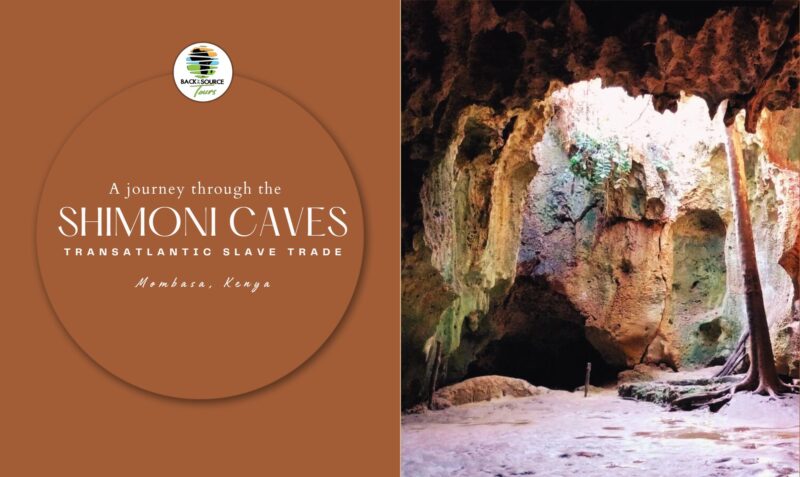
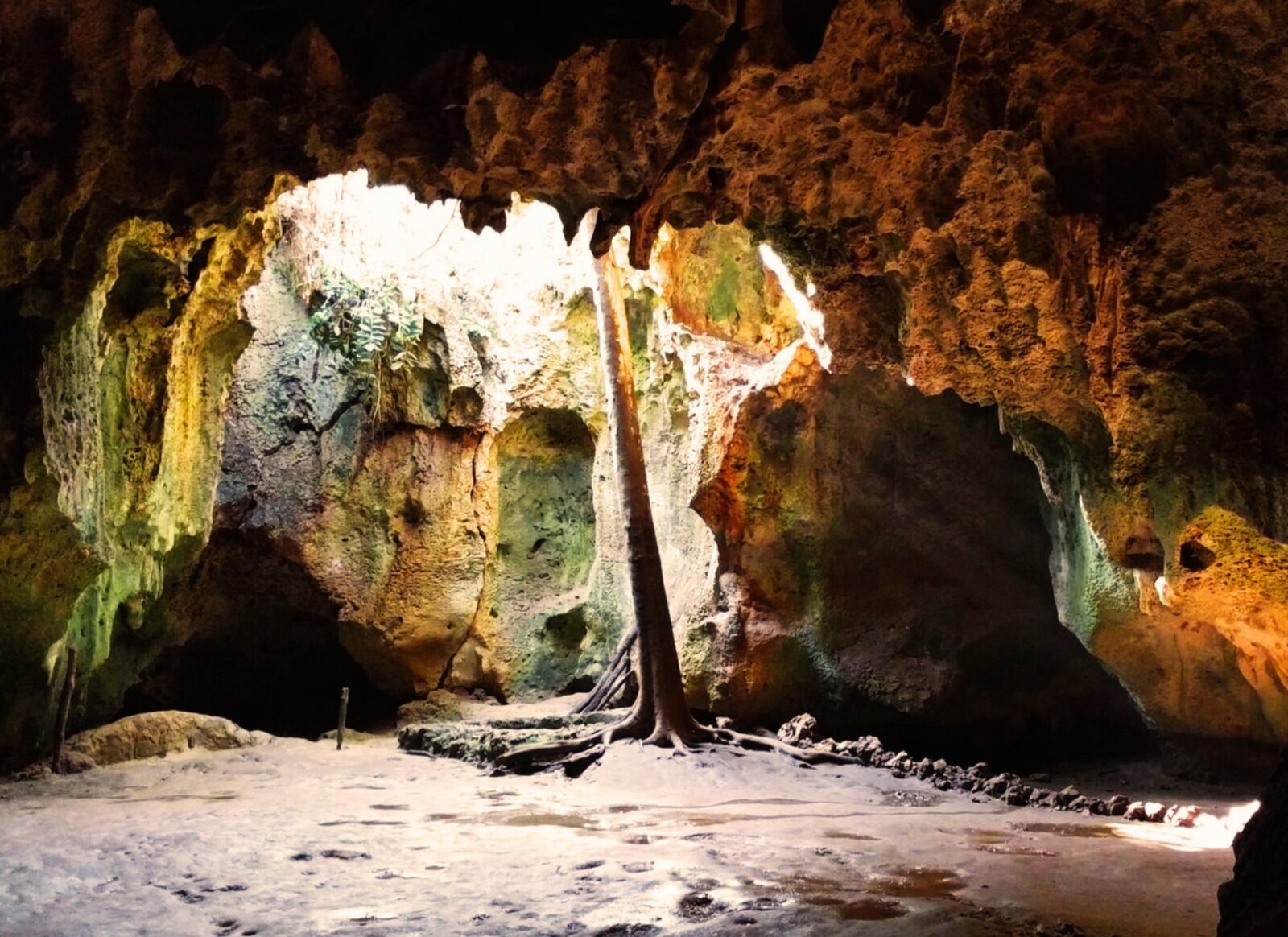
The cave entrance involves a short descent by steps, after which the floor levels into a series of large, connected coral chambers. The atmosphere underground is immediate and unmistakable. The air is cool and damp. Light drops sharply. The chambers are enclosed in a way that makes the reality of confinement viscerally clear within moments of entering.
The natural formations of stalactites and stalagmites, shaped over thousands of years, give the caves a geological drama that makes the human history within them feel even more stark. The iron rings embedded in the coral walls remain visible today. So do fragments of chain. So do the stone cisterns. The guide works from this physical evidence, delivering accounts passed down through generations about how the caves functioned, how people were held, and what the journey here had already cost them.
Additionally, the restored colonial District Commissioner’s building adjacent to the caves houses a slave trade museum with written displays, artifacts, and broader historical context. This exhibition is worth the additional 30 to 45 minutes it takes to move through it properly. It provides the wider frame that the cave experience alone, powerful as it is, cannot fully supply.
How Long Does a Visit to the Shimoni Slave Caves Take?
The cave tour itself runs approximately 30 to 45 minutes, depending on group pace and the depth of engagement with the guide. Visitors who ask questions and spend time with the physical evidence often extend this to a full hour. The adjacent colonial buildings and museum add another 30 to 45 minutes for those who engage seriously with the displays.
A complete Shimoni visit, covering the caves, the museum, and a short walk through the village, runs approximately 1.5 to 2 hours in total. This is precisely why Back to the Source Tours builds the Shimoni Slave Caves into a full south-coast day, combined with the Wasini Island dhow excursion and Kisite-Mpunguti Marine National Park snorkeling. The combination is deliberate. A coast that holds both extraordinary natural beauty and a history that demands attention deserves a day that honours both.
Practical Information for Visiting the Shimoni Slave Caves
Location: Shimoni village, Kwale County, southeastern Kenyan coast, near the Tanzanian border and directly across the channel from Wasini Island.
Getting there: From Diani Beach, the road transfer takes approximately 60 to 75 minutes. From Mombasa, allow 2 to 2.5 hours.
Opening hours: Guided tours run in two daily sessions: 8:30am to 10:30am and 1:30pm to 6pm. Morning visits are recommended for cooler temperatures and better light throughout the surrounding village and colonial buildings.
What to wear and bring: Sturdy closed-toe shoes are essential. The coral cave surfaces are uneven and can be slippery. Bring water. The caves are cooler than the coastal heat outside, which most visitors find a welcome relief. Photography is generally permitted inside; confirm with your guide on arrival.
Accessibility: Entry involves steps to the cave floor. The main chambers are spacious with relatively flat floors. Travelers with significant mobility considerations should discuss the layout with Back to the Source Tours at booking so the visit can be planned appropriately.
Plan Your Shimoni Visit with Back to the Source Tours
The Shimoni Slave Caves are most powerfully experienced as part of a full south-coast day that also includes a traditional dhow excursion to Wasini Island, snorkeling at Kisite-Mpunguti Marine National Park, and a fresh seafood lunch on the island. Back to the Source Tours builds this as a single, seamlessly coordinated programme, with all road transfers, guide service, entry fees, dhow charter, park fees, and lunch included.
Mombasa and Diani Beach sit just 40 to 80 kilometers from Shimoni respectively, connected by straightforward road transfers handled entirely by Back to the Source Tours. Furthermore, the entire south coast region offers more than any single day can contain, which is exactly why planning ahead with a trusted operator changes the quality of what you come home with.
Contact Back to the Source Tours at info@backtothesourcetours.com to add the Shimoni Slave Caves to your Kenya itinerary. Some history demands to be witnessed in the place where it happened. This is one of those places, and it is worth every kilometer of the journey south.
Other Historical Sites in Kenya
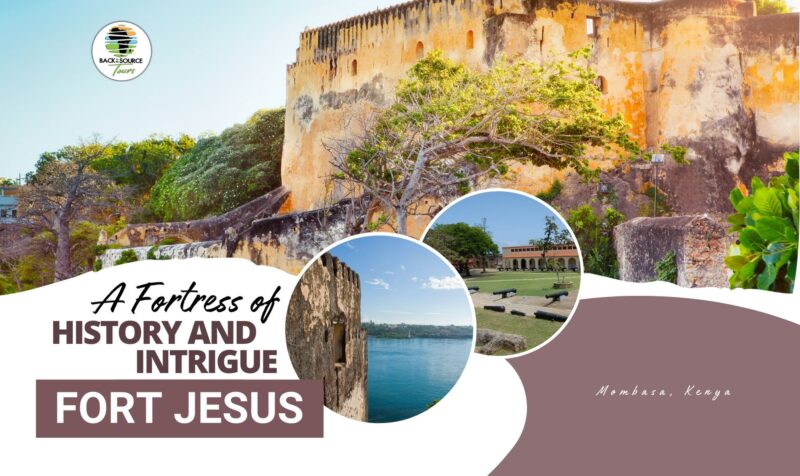
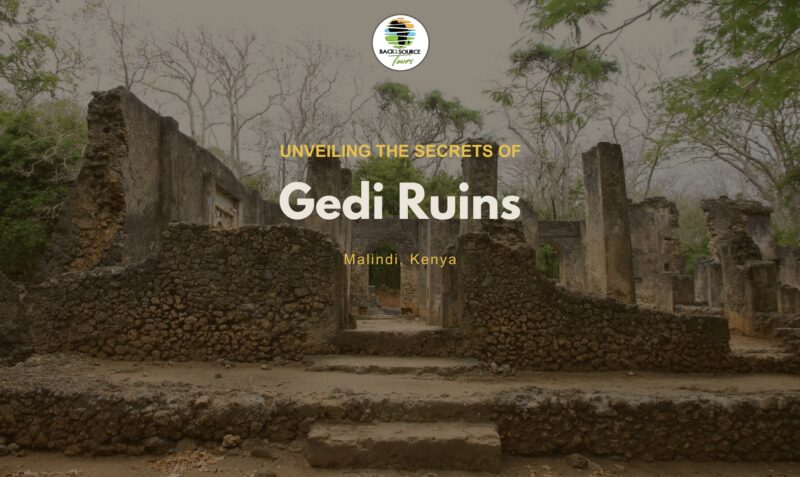
While the Shimoni Caves offer a unique glimpse into Kenya’s past, there are other historical sites worth exploring: Fort Jesus, Gedi Ruins, and Lamu Old Town. By visiting these sites, you can gain a deeper understanding of Kenya’s complex history and its enduring cultural heritage.